
Homemade Tunisian Lben: The Authentic Recipe for Refreshing Fermented Milk
Homemade Tunisian Lben: The Authentic Recipe for Refreshing Fermented Milk
Category
boissons Tunisien
Difficulty
Easy
Preparation
10 min
Cooking
5 min
Servings
4
Views
625
Reading
6 min
Rating
5/5
Description
Imagine a cool sea breeze, a summer sun caressing your skin, and in your hand, a glass with walls beaded with condensation holding a white potion, creamy and alive. That is lben, much more than a simple drink. It is the elixir of freshness of the Maghreb, a liquid balm for hot days and an indispensable table companion that soothes the fire of spices. Making your own fermented milk at home is capturing a little of that everyday Tunisian magic, a simple ritual that transforms a basic ingredient into a unique sensory experience, slightly tangy and incredibly digestible.
The roots of lben plunge deep into the history of nomadic and pastoral peoples around the Mediterranean and the Middle East, where preserving milk was a matter of survival. In Tunisia and throughout the Maghreb, this thousand-year-old tradition has been refined to become a pillar of culinary life. Made from cow's milk, and sometimes sheep's milk, lben is the result of a slow, natural fermentation, guided by beneficial lactic bacteria. It embodies the wisdom of a cuisine that values naturalness and the benefits of living foods, long before these concepts became trendy. It is the drink of hospitality, often offered to guests with dates, and the silent witness to family meals and celebrations.
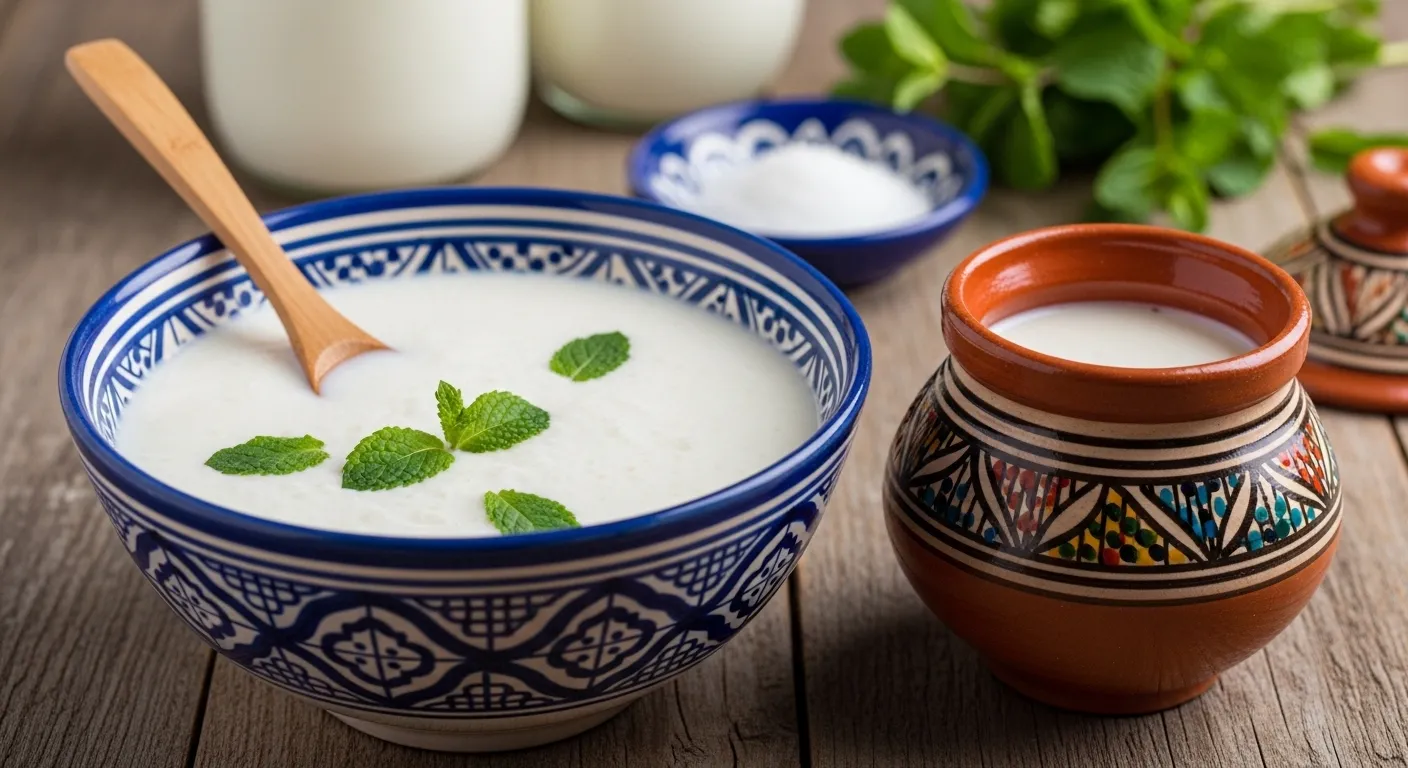
Tasting Tunisian lben is a journey in three stages. Visually, it presents itself with a milky whiteness and a texture that can vary from perfectly smooth to slightly lumpy, a sign of authentic fermentation. On the nose, it exudes a soft, clean fragrance, a milky note subtly lifted by a tangy hint that announces its freshness. On the palate, it is a true symphony of lightness. The first impression is one of velvety creaminess, almost airy, that envelops the palate. Then comes a lively but short acidity, sparkling and refreshing, that cleanses the taste buds without any aggressiveness. The finish is clean, light and incredibly thirst-quenching, leaving a sensation of purity and digestive well-being. It is this tangy freshness, this natural sparkle on the tongue, that makes it the perfect antidote to generously spiced dishes.
Lben finds its favorite place on Tunisian tables, especially during the hot summer months. It is the essential partner for grilled meats, saucy dishes such as couscous or tagine, where its refreshing and digestive power allows you to fully appreciate the nuances of spices. It can also be enjoyed on its own, well chilled, as a snack or a revitalizing pick-me-up in the middle of the day. In Maghreb culture, it is not uncommon to serve it at breakfast with bread and olive oil, or to use it as a base for cold summer soups. It is an everyday, democratic drink that symbolizes hospitality and sharing. Making your own homemade lben is perpetuating this convivial tradition and treating yourself to a moment of pure freshness, at any time.
Embarking on making your own Tunisian fermented milk is a simple, almost meditative gesture that connects you to an ancestral tradition. The result is incomparable to industrial versions: more alive, more aromatic and endlessly customizable. Whether you want to enjoy it plain, lightly salted or enhanced with a touch of chopped fresh mint, this homemade lben will be your freshness ally all year round. Follow this authentic recipe and let yourself be surprised by the magic of fermentation, which humbly transforms milk into a true elixir of well-being and freshness. Prepare, wait, and savor: summer in a bottle awaits you.
Ingredients
- 1 litre of fresh whole milk (cow's milk, or semi-skimmed for a lighter version)
- 2 generously heaped tablespoons of store-bought lben (or very fresh plain stirred yogurt, as a starter culture)
- 1 pinch of fine salt (optional, for serving)
- A few fresh mint leaves (optional, for serving)
- 1 clean wide-neck glass bottle or a fermentation jar (about 1.5 litres)
Preparation steps
-
1
Thoroughly sterilize your glass bottle or jar and its lid. You can boil them in water or run them through the dishwasher. This step is crucial to prevent the growth of harmful bacteria.
-
2
In a saucepan, bring the litre of milk to a boil over medium heat. Stir occasionally to prevent the milk from sticking to the bottom. Let it boil for 2 to 3 minutes, then remove from the heat.
-
3
Let the milk cool until it is lukewarm, at an ideal temperature of 40-45°C (you should be able to dip your clean finger in without burning yourself, about 5-7 minutes). This is the perfect temperature to activate the cultures.
-
4
In a bowl, ladle out some of the lukewarm milk and gently mix in the 2 tablespoons of lben (or yogurt) to emulsify it completely. This prevents lumps.
-
5
Pour this mixture back into the saucepan of lukewarm milk and stir gently but thoroughly to homogenize everything.
-
6
Transfer the inoculated milk into your sterile bottle or jar. Seal tightly with the lid.
-
7
Wrap the container in a clean dish towel or place it in a draft-free spot at room temperature (ideally between 20°C and 25°C). Leave to ferment for 24 to 48 hours. The milk will thicken slightly and develop its characteristic acidity.
-
8
After 24 hours, taste a small spoonful. Fermentation is complete when the lben has a consistency slightly thicker than milk, a pleasant tangy taste and a texture that may be smooth or have fine lumps (this is natural). The longer you let it ferment, the more pronounced the acidity will be.
-
9
Once the fermentation is to your liking, place the lben in the refrigerator for at least 4 hours. The cold will stop the fermentation and allow the flavors to stabilize. It will keep for 4 to 5 days.
-
10
To serve, gently shake the bottle. Pour the well-chilled lben into glasses. You can add a pinch of salt per glass if you wish, and garnish with a fresh mint leaf. Enjoy immediately.
Rate this recipe
Comments 0
No comments yet. Be the first to comment!