
Libyan Saikouk Couscous with Goat Lben and Fresh Dates
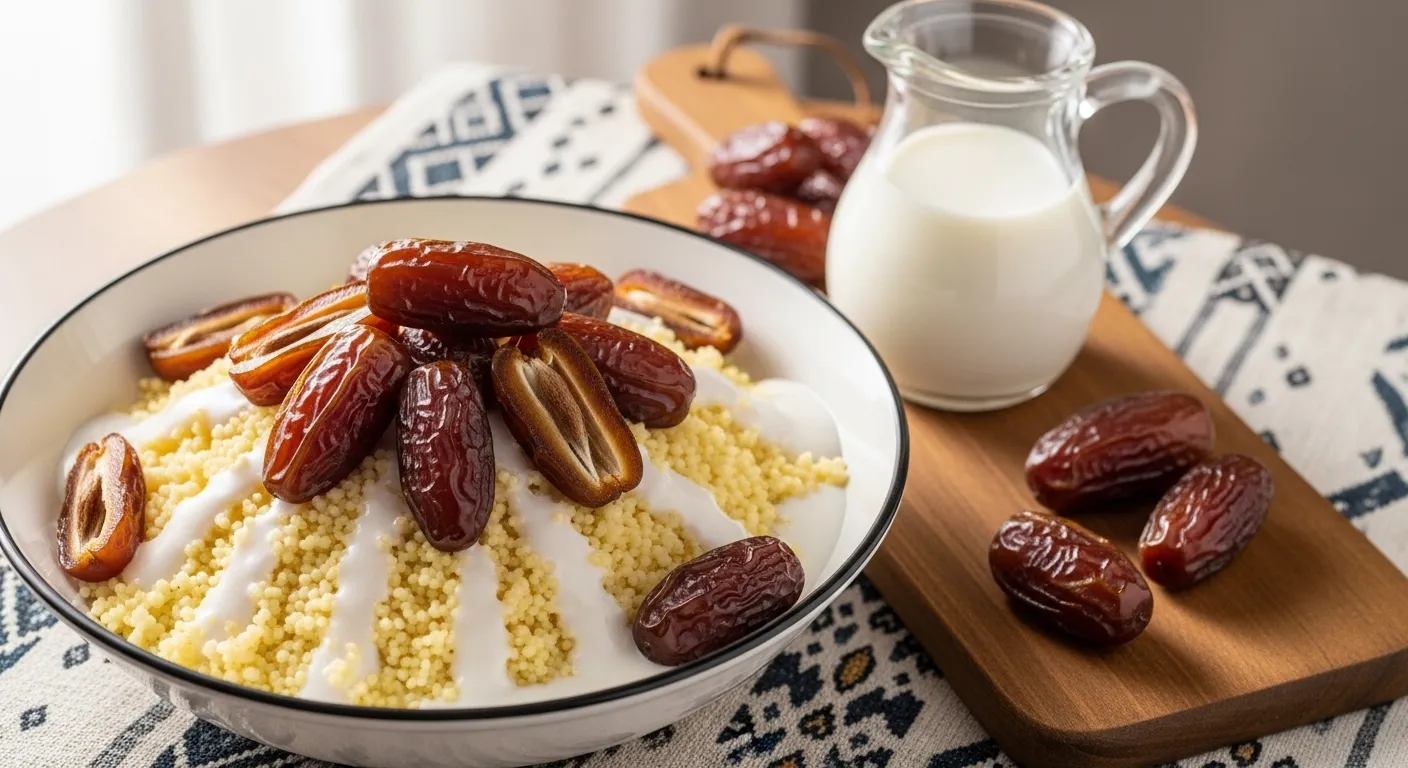
Libyan Saikouk Couscous with Goat Lben and Fresh Dates
Category
Plats traditionnels
Difficulty
Medium
Preparation
25 min
Cooking
30 min
Servings
3
Views
449
Reading
7 min
Rating
5/5
Description
Imagine a light desert breeze caressing your palate, a creamy sweetness intertwining with sweet and earthy notes. This Libyan couscous, called Saikouk, is not a simple dish; it is a sensory experience. It appears as a cloud of fine semolina, delicately buttered, which becomes the vessel for a surprising elixir: lben, this slightly tangy fermented milk. Poured over cold, it transforms the warmth of the grain into an unexpected freshness, a contrast that is the very signature of this recipe. On this soft bed, fresh, fleshy and honeyed dates add their natural sweetness, while a shower of fragrant cinnamon finishes this composition in perfect balance between sweet, savory and fermented.
This dish is rooted in the pastoral and Bedouin traditions of Libya and the greater Maghreb, where fermented dairy products like lben were essential means of preservation. Far from being a simple drink, fermented milk is here a culinary ingredient in its own right, revealing all of its complexity. Saikouk belongs to the family of couscous “masfouf”, those light couscous dishes, often sweet or garnished with fresh vegetables, prepared for happy occasions or quick meals. It is a cuisine of the moment, which celebrates the simplicity of noble ingredients: a quality durum wheat semolina, a traditional rancid butter, and the fruit of the palm tree, a symbol of life and hospitality in the desert.
The magic happens from the very first bite. The texture of the semolina, worked and steamed twice for optimal lightness, is incomparably fine. Each grain, separated and airy, literally melts in the mouth. The arrival of cold goat lben is a revelation: its tangy freshness and creaminess envelop the warm grains, creating a sensation both comforting and invigorating. It is this daring marriage of hot and cold, neutral and sour, that forms the heart of the recipe. The fresh dates, for their part, add bursts of melting sweetness and a soft texture that contrasts with the grain. Cinnamon, in the finish, ties everything together with its warm and slightly spicy aroma, recalling the spices of the souks.
This traditional couscous is a dish of togetherness and breaking the fast. It is often served at the ftour meal during Ramadan, when its lightness and refreshing qualities are particularly appreciated after a long day. It is also a festive dish, prepared to welcome honored guests, a symbol of generosity and sharing. It is ideally enjoyed with family, shared in a large platter, where everyone helps themselves. It is sometimes accompanied by walnuts or slivered almonds for extra crunch, but its purest version, with just lben, dates and cinnamon, remains the most authentic and moving.
Preparing this Saikouk with fermented milk and dates is to offer yourself a culinary journey into the heart of Libyan oases. It is a recipe that seems simple but requires a little know-how, particularly to achieve the perfect texture of the semolina. It reserves an unforgettable taste surprise, an alliance of flavors that speaks directly to the soul. So dare this refreshing sweet-savory blend, let yourself be tempted by the authenticity of this dish that tells a story — that of the desert, the nomads and a thousand-year-old culinary tradition where each ingredient has its place and meaning. Your table will vibrate with the colors and flavors of the Maghreb.
Ingredients
- 500g fine durum wheat semolina (fine couscous type)
- 1 litre goat lben (fermented milk), well chilled
- 200g fresh dates (Deglet Nour or Medjool style), pitted
- 80g unsalted butter (or traditional rancid butter if available)
- 1 teaspoon fine salt
- 2 tablespoons cold water (for working the semolina)
- 1 teaspoon ground cinnamon
- 1 pinch of salt for the dates (optional)
Preparation steps
-
1
Prepare the semolina. In a large bowl, pour the fine semolina. Mix in the fine salt. Sprinkle the 2 tablespoons of cold water in a fine stream while working the semolina with your fingertips. The goal is to evenly moisten the semolina so that it absorbs the moisture and swells uniformly during steaming. Gently rub the grains between your palms until they are separated and light.
-
2
First steaming. Fill the bottom of a couscous steamer (or a large pot with a steamer basket) halfway with water and bring to a boil. Spread the moistened semolina in the steamer basket without packing it down. Place the basket over the pot of boiling water and cover. Steam over high heat for 10 minutes.
-
3
Aerate the semolina. After the first cooking, carefully turn the hot semolina back into the large bowl. Add half the butter (40g) in pieces. Using a fork or your hands (protected with gloves if too hot), separate the grains by lifting and aerating the semolina. Break up any small lumps. This step is crucial for obtaining well-separated, light grains.
-
4
Second steaming. Return the aerated semolina to the couscous steamer basket, again without packing it down. Steam again, covered, for 15 minutes. Meanwhile, cut the pitted dates in half or into quarters depending on their size.
-
5
Finishing and buttering. Once the second cooking is finished, turn the very hot semolina back into the bowl. Add the remaining butter (40g) and mix gently until it is completely melted and coats every grain. The semolina should be glossy and fragrant.
-
6
Plating. Transfer the hot couscous to a large traditional serving platter or a deep plate. Flatten it slightly, forming a slight well in the center.
-
7
Pouring the lben. Just before serving, take the lben (fermented milk) out of the refrigerator. Pour it generously and evenly over the hot couscous. The temperature difference between the hot dish and the cold milk is a key element of the recipe.
-
8
Garnish. Arrange the fresh date pieces harmoniously over the entire surface of the dish. Sprinkle generously with ground cinnamon. You can add a very small pinch of salt over the dates to enhance their sweetness, if desired.
-
9
Serving. Serve immediately, inviting everyone to mix gently on their plate so that the flavors of hot couscous, cold lben, dates and cinnamon combine perfectly.
Rate this recipe
Comments 0
No comments yet. Be the first to comment!