
Oven-Baked Tunisian Kafteji: Light and Authentic Recipe
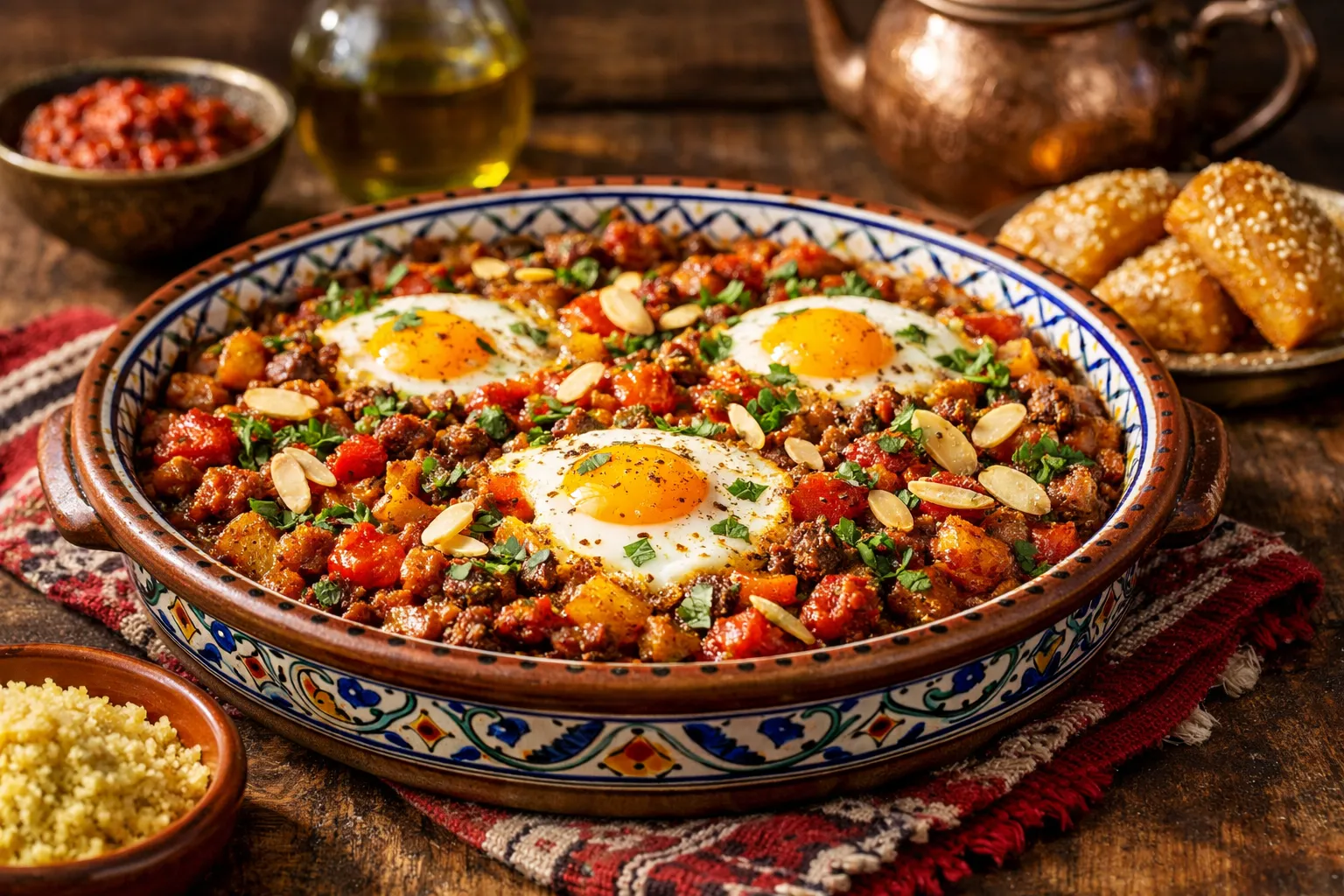
Oven-Baked Tunisian Kafteji: Light and Authentic Recipe
Category
Street food & plats populaires - Tunisien
Difficulty
Easy
Preparation
20 min
Cooking
40 min
Servings
3
Views
777
Reading
6 min
Rating
5/5
Description
Imagine a symphony of caramelized vegetables and warm spices, a scent that fills the kitchen like a sweet memory of Tunis. Kafteji, that jewel of Tunisian street food, is reinvented here in a lighter, oven-baked version that preserves all its soul while caring for your well-being. It is more than a simple vegetable dish; it is a sensory experience, a culinary journey into the heart of Tunis’s bustling lanes, revisited to fit our modern daily lives. This oven-baked kafteji is the promise of preserved authenticity, without excess fat, for a pure and comforting explosion of flavour.
Kafteji draws its roots deep in Tunisian culinary heritage, where it reigns as king of food stalls and markets. Originally, it was a workers’ dish — quick, nourishing and economical — made from seasonal vegetables fried then finely chopped. Its very name, derived from the Italian “frittata” or evoking the action of chopping (“kafta”), tells a story of cultural blending and ingenious simplicity. It is the very essence of street food: robust, generous and laden with emotion. Our oven-baked version is a tribute to that tradition, a bridge between the heritage of the past and today’s culinary aspirations, proving that you can honour a classic while adapting it with lightness.
The magic of this kafteji lies in the alchemy of flavours and textures that the oven enhances. The bell peppers and chili peppers become soft and sweet, almost confit, while the potatoes develop a golden crust and a melting heart. The aubergines, for their part, turn into true flavour sponges, absorbing the smoked paprika and cumin. The garlic and fresh coriander bring a sharp, herbaceous note that wakes everything up. Each bite is a firework: first the sweetness of roasted vegetables, then the subtle heat of the chili, and finally the earthy complexity of spices that resonates long on the palate. It is a harmonious cacophony, a perfect balance between melting, crunchy and spicy.
This oven-baked kafteji is the ideal companion for all gatherings. It is traditionally enjoyed hot, accompanied by fried eggs or grilled merguez sausages for the more indulgent, but its lighter version also makes it a remarkable vegetarian main dish for a family dinner. It is perfect for a balanced evening meal, for impressing guests with a typical yet refined dish, or even for taking on a picnic, served at room temperature. In Tunisia, it is often eaten with fresh bread to soak up the last crumb of this delicious mixture. It is a dish that brings people together, is shared, and tells a story each time it is served.
Preparing this kafteji is an invitation to slow down and enjoy the process. The smell of vegetables roasting is a real delight, an anticipation of the feast to come. This recipe is an accessible gateway to the richness of Tunisian cuisine, a way to travel from your own kitchen. It proves to you that eating healthy and light does not mean giving up taste — quite the opposite. So let yourself be tempted by this culinary adventure: chop, season, bake, and let the magic of the oven do its work. You will get a vibrant, generous and deeply comforting dish, a celebration of vegetables and spices that will make your taste buds sing and warm your home.
Ingredients
- 2 large potatoes (about 500g)
- 1 aubergine (about 300g)
- 2 red bell peppers
- 2 green bell peppers
- 1-2 fresh green chili peppers (to taste)
- 1 red onion
- 4 garlic cloves
- 3 tablespoons olive oil
- 1 teaspoon ground cumin
- 1 teaspoon sweet paprika
- 1 teaspoon ground coriander
- Juice of half a lemon
- 1 generous handful of chopped fresh coriander
- Salt and freshly ground black pepper
Preparation steps
-
1
Preheat your oven to 200°C (gas mark 6-7). Wash all the vegetables thoroughly. Peel the potatoes and dice them into roughly 2 cm pieces. Cut the aubergine into similar-sized dice, without peeling it.
-
2
Seed the red and green bell peppers and cut them into pieces. Thinly slice the red onion. Mince the garlic cloves. For the chili peppers, remove the seeds if you want to reduce the heat and chop them finely.
-
3
In a large bowl, combine all the cut vegetables (potatoes, aubergine, bell peppers, onion, garlic and chili pepper). Drizzle with the olive oil and lemon juice, and sprinkle with the cumin, paprika, ground coriander, salt and pepper. Mix vigorously with your hands so that all the pieces are well coated with oil and spices.
-
4
Spread the vegetable mixture in a single layer on a large baking sheet lined with parchment paper. This allows for optimal caramelization. Bake for 35 to 40 minutes.
-
5
Halfway through cooking (after 20 minutes), remove the baking sheet and gently stir the vegetables with a spatula so they brown evenly. Return to the oven for the remaining time.
-
6
The vegetables are ready when the potatoes and aubergine are tender and well coloured, and the bell peppers are lightly charred around the edges. Remove the baking sheet from the oven and let cool for 5 minutes.
-
7
Transfer the roasted vegetable mixture to a large deep dish or a bowl. Using a potato masher or a sturdy fork, lightly crush the vegetables. The goal is not to make a smooth purée, but a rustic mixture where the pieces remain discernible, with the typical kafteji texture.
-
8
Stir in the chopped fresh coriander and taste. Adjust the seasoning with salt, pepper or spices if necessary. Gently mix one last time.
-
9
Serve the kafteji very hot, alongside fried eggs, grilled fish, or as a vegetarian main dish with fresh bread and olives. It can also be enjoyed warm.
Rate this recipe
Comments 0
No comments yet. Be the first to comment!