
Tunisian Mlawi: The Authentic Crispy Flaky Flatbread
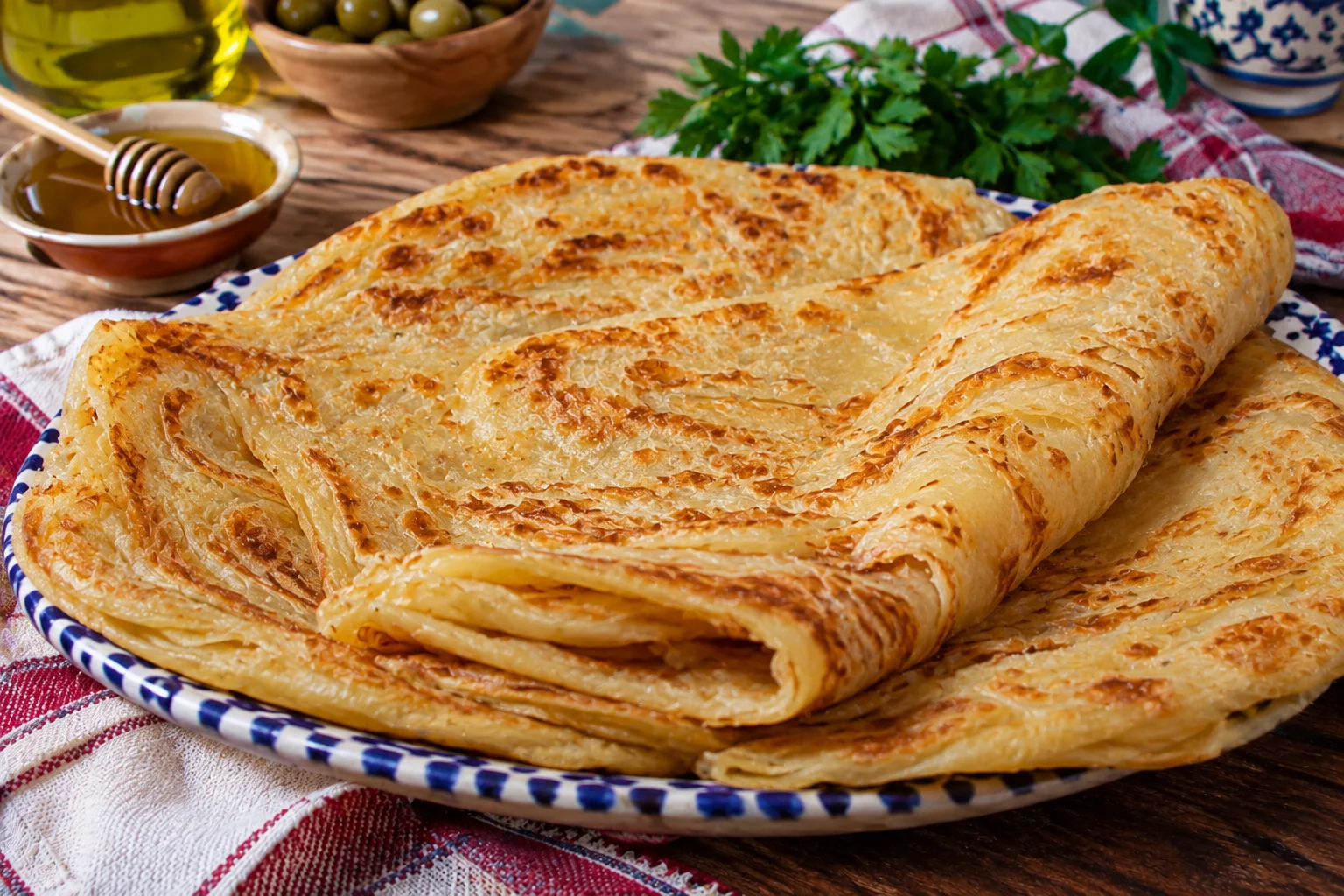
Tunisian Mlawi: The Authentic Crispy Flaky Flatbread
Category
Plats à base de pâtes & galettes - Tunisien
Difficulty
Medium
Preparation
90 min
Cooking
20 min
Servings
4
Views
567
Reading
6 min
Rating
5/5
Description
Tunisian Mlawi is a bit like a golden treasure revealed with every bite. Imagine a thin, crispy flatbread with multiple delicately flaky layers that shatters between your teeth to reveal a tender, soft heart. It is a true caress for the taste buds, a simple and comforting pleasure that instantly evokes the bustling streets of Tunis, where street vendors prepare these wonders on large hot griddles. Each piece is an invitation to a sensory journey, a symphony of textures that plays out in the mouth, between the crunch of the outside and the softness of the inside.
Mlawi, also spelled Mlaoui or Mlawi, is a traditional Tunisian bread rooted in Maghrebi culinary heritage. Its name evokes the twisting and folding of the dough, an ancestral technique handed down from generation to generation. Historically, this bread was prepared by homemakers to accompany everyday meals, but it quickly became a staple of Tunisian street food. Today, it is enjoyed at any time of day, whether at breakfast with a little honey or cheese, or as a sandwich filled with tuna, eggs, harissa, or grilled vegetables. Its popularity extends well beyond Tunisia's borders, and it is appreciated throughout the Maghreb and even in Europe, where the Tunisian diaspora keeps this culinary tradition alive.
What makes Mlawi so irresistible is its contrast of flavors and textures. The dough, made from fine semolina and flour, is stretched thinly then folded into successive layers, creating a light, airy flakiness. During cooking on a hot griddle or in a pan, olive oil permeates each layer, adding aromatic richness and an appetizing golden color. The result is a flatbread that is crispy on the outside and incredibly tender on the inside, with a slight toasted semolina flavor that pairs perfectly with savory or sweet fillings. It's an explosion of simple yet authentic flavors that awakens the taste buds and recalls the pleasures of Mediterranean street food.
Mlawi is much more than just a bread: it is a symbol of conviviality and sharing. In Tunisia, it is often prepared in large quantities during religious holidays such as Eid, or during the month of Ramadan, when it is served to break the fast. It is also found at weddings and family celebrations, accompanied by traditional dishes such as chorba or couscous. Its versatility makes it a staple in many households, and each family has its own recipe, passed down with love and pride. Making Mlawi at home means perpetuating a rich culinary heritage and inviting a little Tunisian warmth into your kitchen.
So let yourself be tempted by this authentic Tunisian Mlawi recipe. With simple ingredients and a little patience, you can recreate at home this flaky flatbread that is the pride of Tunisia. Whether you enjoy it plain, with a drizzle of honey, or filled with your favorite ingredients, every bite will be a true delight. Follow our detailed steps and tips to ensure this traditional bread is a success, and treat yourself to a recipe that smells of sunshine and the Mediterranean.
Ingredients
- 500 g fine semolina
- 250 g wheat flour
- 1 teaspoon salt
- 300 ml warm water
- 100 ml olive oil (or vegetable oil)
- 1 tablespoon dry baker's yeast (or 20 g fresh yeast)
- 1 teaspoon sugar
- Extra oil for shaping and cooking
Preparation steps
-
1
In a large bowl, mix the fine semolina, flour, and salt. Make a well in the center.
-
2
In a small bowl, dissolve the yeast and sugar in the warm water. Let it sit for 5 minutes until the mixture becomes slightly foamy.
-
3
Pour the yeast mixture into the well, then add the olive oil. Mix gradually, incorporating the flour until you obtain a homogeneous dough.
-
4
Knead the dough on a lightly floured work surface for about 10 minutes, until it is smooth and elastic. If it is too dry, add a little warm water; if it is too sticky, add a little flour.
-
5
Shape the dough into a ball, cover it with a clean cloth, and let it rest in a warm place for about 1 hour, or until it doubles in volume.
-
6
Divide the dough into 8 to 10 equal-sized balls. On an oiled work surface, flatten each ball with the palm of your hand to form a very thin, almost translucent disk. Brush generously with oil.
-
7
Fold the disk in thirds, like an envelope, then roll it up on itself to form a log. Coil this log into a spiral to form a small ball. Repeat the process for all the balls.
-
8
Let the shaped balls rest for 15 minutes, covered with a cloth.
-
9
Flatten each ball with your hand or a rolling pin on an oiled work surface to form a flatbread about 15 cm in diameter and 0.5 cm thick.
-
10
Heat a pan or griddle over medium heat. Cook each flatbread for about 2-3 minutes on each side, until it is golden and crispy. During cooking, press lightly with a spatula to encourage flakiness.
-
11
Serve hot, plain or filled as desired. Mlawi keeps well in a clean kitchen towel and can be reheated in a pan or in the oven.
Nutrition
| Fat | 12 g |
|---|---|
| Calories | 350 kcal |
| Carbohydrates | 55 g |
| Protein | 8 g |
Rate this recipe
Comments 0
No comments yet. Be the first to comment!