
Tunisian Mloukhia - Traditional Dish with Corète and Meat
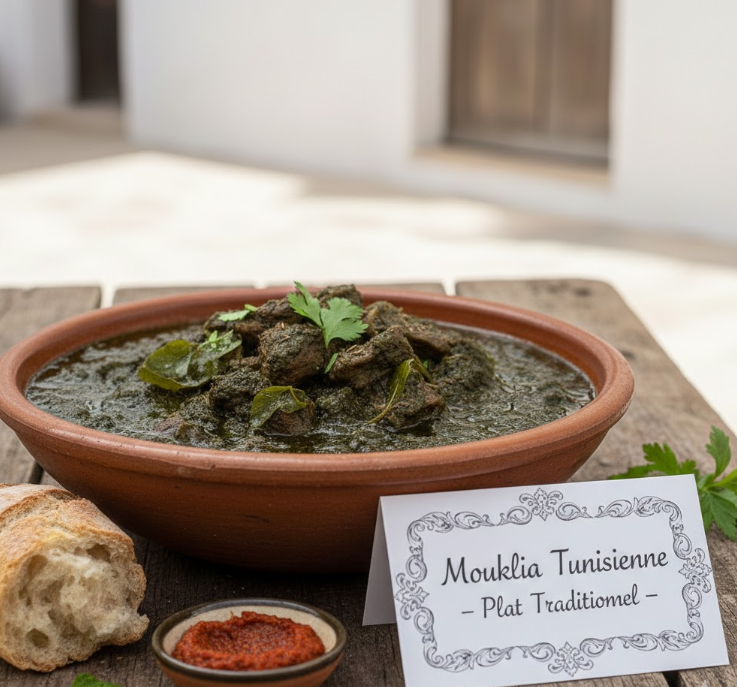
Tunisian Mloukhia - Traditional Dish with Corète and Meat
Category
Plats traditionnels - Tunisien
Difficulty
Medium
Preparation
20 min
Cooking
55 - 75 min
Servings
3
Views
4,638
Reading
5 min
Rating
5/5
Description
Discover the authenticity of Tunisian cuisine with this traditional Tunisian Mloukhia recipe, a slow-cooked dish that awakens the senses like a symphony of flavors in Tunisian homes. This Tunisian specialty is a true emblem of traditional gastronomy, combining the richness of ground corète (mloukhia) with the tenderness of the meat and the smoothness of the olive oil.
Like a tajine simmering gently and revealing its secrets, Mloukhia transforms simple ingredients into a royal feast. The dried corète leaves, ground into a fine powder, create a velvety, fragrant sauce that delicately coats the beef or lamb, creating a perfect harmony of textures and flavors. This Mloukhia recipe transports you directly to the traditional kitchens of Tunis, where every bite tells a story of tradition and family togetherness.
Tunisian Mloukhia is much more than a simple dish: it is an invitation to discover the soul of Tunisian cuisine, where every ingredient plays its role in this millennia-old culinary masterpiece. Served hot with fragrant rice or traditional bread, this traditional recipe is perfect for family meals and special occasions, bringing comfort and warmth to every tasting.
Ingredients
- 100 g mloukhia powder (dried and ground corète / Jew's mallow)
- 500 g beef or lamb meat (shoulder or neck, cut into pieces)
- 500 ml hot water
- 50 ml extra virgin olive oil
- 2 garlic cloves, chopped
- 1/2 medium onion, thinly sliced
- 1/2 tablespoon tomato paste
- 1/2 teaspoon sweet paprika
- 1/2 teaspoon ground coriander
- 1/2 teaspoon ground caraway
- 1 bay leaf
- Salt and freshly ground black pepper
- Fragrant rice, to serve
- Lemon wedges, to serve
Preparation steps
-
1
Prepare the meat: Cut the meat into medium-sized pieces (about 4-5 cm). Season generously with salt and pepper. Let marinate for 15-20 minutes at room temperature so the flavors penetrate the meat well.
-
2
Heat the olive oil: In a large Dutch oven or tajine, heat the olive oil over medium heat. The oil should be hot but not smoking. Use a cast-iron or clay pot for a more traditional cooking and better heat distribution.
-
3
Sauté the onion and garlic: Add the sliced onion to the hot oil and sauté for 3-4 minutes until translucent and lightly golden. Then add the chopped garlic and sauté for an additional 30 seconds, stirring constantly to prevent burning.
-
4
Brown the meat: Add the meat pieces to the Dutch oven and brown them on all sides for 5-7 minutes, until well colored. This step is important because it develops flavors and creates a savory crust on the meat.
-
5
Incorporate the mloukhia powder: Reduce the heat to medium-low. Add the mloukhia powder directly over the meat and mix gently with a wooden spoon to coat all the pieces. The mloukhia powder will absorb the oil and create a thick paste. Mix for 2-3 minutes until a homogeneous texture is obtained.
-
6
Pour in the water gradually: Pour in the hot water little by little, stirring constantly with a whisk or a wooden spoon to prevent lumps from forming. Start by pouring a glass of water, mix well, then continue gradually until you have poured in the whole litre. The sauce should be smooth and homogeneous.
-
7
Add the spices and aromatics: Incorporate the tomato paste, paprika, ground coriander, ground caraway and bay leaf. Mix well so that all the ingredients are well incorporated. Taste and adjust the seasoning with salt and pepper according to your preferences.
-
8
Simmer long: Bring to a boil, then immediately reduce the heat to low. Cover the Dutch oven and let simmer gently for 2 to 3 hours, stirring from time to time. The meat should be very tender and the sauce should have thickened and taken on a beautiful dark green color characteristic of mloukhia.
-
9
Check the cooking: After 2 hours, check the tenderness of the meat. It should pull apart easily with a fork. If necessary, continue cooking for another 30 minutes. The sauce should be creamy and velvety, neither too thin nor too thick. If it is too thick, add a little hot water. If it is too thin, let simmer uncovered for an additional 10-15 minutes.
-
10
Prepare the accompaniment: While the mloukhia is simmering, prepare fragrant rice. Cook the rice according to your preferences (steamed, boiled, or pilaf). The rice should be well cooked and slightly sticky to perfectly accompany the creamy sauce of the mloukhia.
-
11
Serve and enjoy: Serve the mloukhia very hot in a deep serving dish. Place the meat in the centre and generously coat with the sauce. Serve with fragrant rice and lemon wedges. Each guest can squeeze a little lemon over their portion for a touch of freshness. Serve with traditional bread to mop up this delicious sauce.
-
12
Chef's tip: For an even more authentic version, you can use fresh mloukhia leaves if you can find them. In this case, wash them thoroughly, dry them, then chop them finely before adding them to the preparation. Mloukhia keeps very well in the refrigerator for 2-3 days and reheats perfectly. It can even be frozen for longer storage.
Nutrition
| Fiber | 4 g |
|---|---|
| Fat | 24 g |
| Calories | 385 kcal |
| Carbohydrates | 12 g |
| Protein | 28 g |
Rate this recipe
Comments 0
No comments yet. Be the first to comment!