
Bissara with Fresh Peas and Fava Beans with Terfesse: Spring Velouté from Morocco
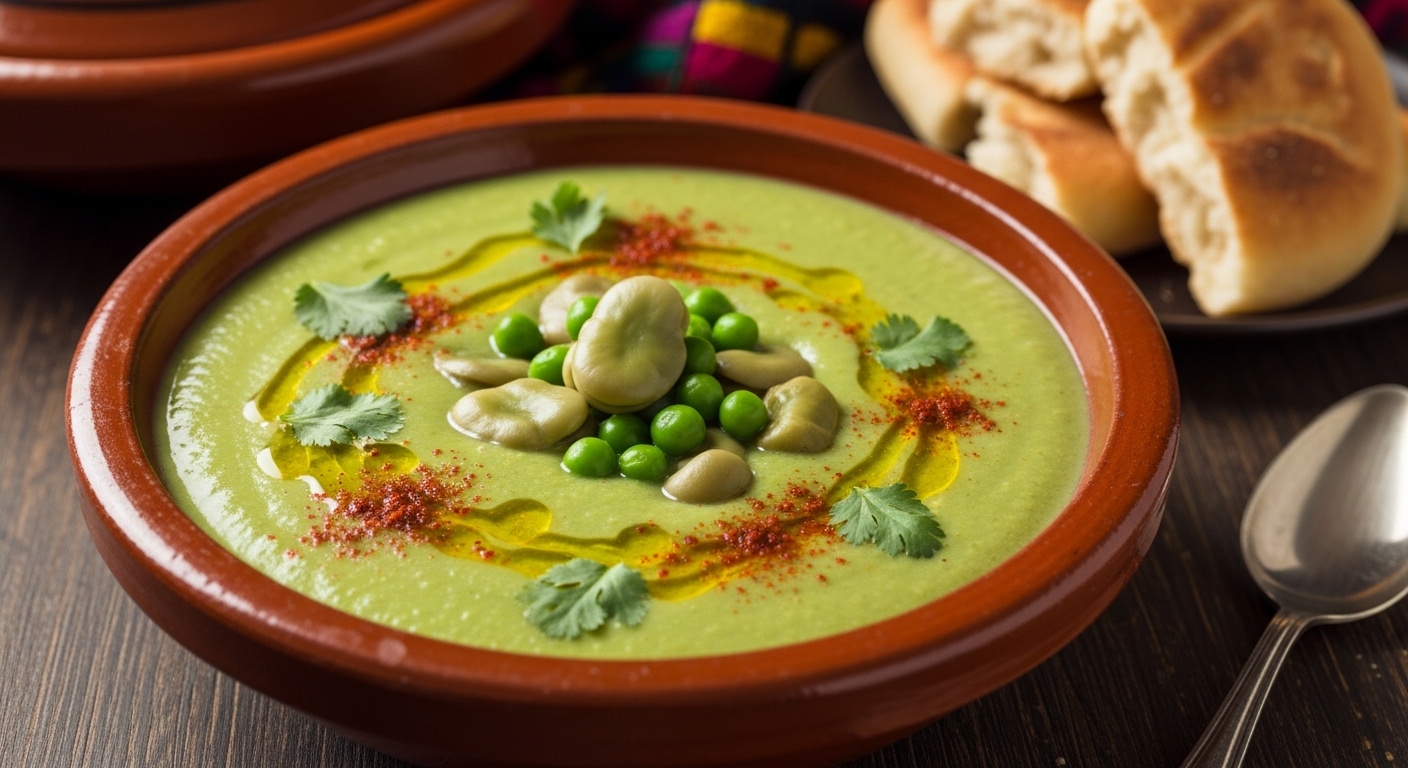
Bissara with Fresh Peas and Fava Beans with Terfesse: Spring Velouté from Morocco
Category
Plats traditionnels - Marocain
Difficulty
Easy
Preparation
20 min
Cooking
35 min
Servings
4
Views
410
Reading
6 min
Rating
5/5
Description
Imagine a cocoon of springtime softness, a soup that is not just a dish, but a warm embrace. The Bissara revisited with fresh peas and fava beans is exactly that: a symphony of greens where ancestral rusticity meets a chef's delicacy. It is no longer the simple purée of dried fava beans from winter days, but a celebration of the earth's rebirth, a canvas on which the treasures of the desert and the argan grove are laid. Every spoonful promises a journey, from the irrigated fields of the Atlas to the sandy expanses where black gold is born.
Bissara is a pillar of Moroccan cuisine, a recipe of humble Berber origin, traditionally prepared with dried fava beans to nourish bodies during cold days. This springtime version is its natural evolution, an homage to the season's generosity. By using fresh peas and fava beans, you capture the very essence of renewal, a practice that connects the cook to the rhythm of markets and harvests. The addition of terfesse, or desert truffle, is a bridge to nomadic traditions, a rare and revered ingredient that speaks of the secrets of the Sahara. Smoked argan oil, for its part, brings the smoky, nutty signature of the Atlantic coast, creating a culinary dialogue between the coastline and the interior.
The magic happens from the very first encounter on the palate. The velouté, with its silky smoothness, first unfolds the sweet and vibrant sweetness of fresh peas, like a morning breeze. Then comes the more substantial and slightly earthy texture of the fava beans, offering a deep and reassuring base. The garlic and cumin, discreetly sautéed, weave a warm and familiar aromatic backdrop. Then comes the element of surprise: grated terfesse. Its aroma is complex, slightly musky, with woody and subterranean notes reminiscent of the earth after rain. It does not dominate, but infuses the dish with a unique and mysterious character. Finally, as a crowning touch, the drizzle of smoked argan oil provides a spectacular finish. Its intense aroma of roasted hazelnut and its smoky taste envelop the whole like a precious veil, enhancing each flavor without ever overwhelming it. It is an explosion of textures and aromas where fresh, sweet, earthy and smoky dance a perfectly balanced ballet.
This Moroccan velouté is much more than a starter; it is a statement. It is ideally enjoyed at the beginning of a meal to elegantly awaken the palate, or as a light main course accompanied by traditional bread for delicious dipping. It is the star of spring dinners, bringing a touch of originality and refinement to the table. Served in terracotta bowls, it immediately evokes the craftsmanship and authenticity of the Maghreb. It is also a wonderful way to celebrate the first vegetables of the season, to cook with the present moment and to share a moment of conviviality around a creation that honors both tradition and innovation. It tells a story, that of a country where cuisine is a living art, constantly reinvented.
Preparing this Bissara with fresh peas and fava beans with desert truffle is to offer yourself a moment of pure creation. It is transforming simple ingredients into a memorable gastronomic experience. Let yourself be guided by the aromas that will fill your kitchen: the liveliness of the peas, the smokiness of the argan, the mystery of the terfesse. This dish is an invitation to travel, an open door to the enchanting flavors of Morocco. It only asks to be discovered, savored and shared. So go ahead, and let this authentic and unique recipe transport you to the heart of a Moroccan spring, where each spoonful is a promise of escape and absolute delight.
Ingredients
- 500 g fresh peas, shelled (or 300 g good-quality frozen peas)
- 300 g fresh fava beans, shelled (peeled if they are large)
- 1 yellow onion, finely chopped
- 2 garlic cloves, pressed
- 1 teaspoon ground cumin
- 1 litre water or light vegetable stock
- 3 tablespoons olive oil
- Salt and freshly ground black pepper
- 10 g dried terfesse (desert truffle), for grating at serving time
- 2 tablespoons smoked argan oil (or regular)
- A few fresh mint or cilantro leaves for garnish
Preparation steps
-
1
Prepare the vegetables: if using fresh peas and fava beans, shell them. For the fava beans, remove the thick skin surrounding them if they are not very young and tender. Set aside.
-
2
In a large heavy-bottomed pot, heat the olive oil over medium-low heat. Add the chopped onion and sweat for 5 minutes until translucent and tender, without coloring.
-
3
Stir in the pressed garlic and ground cumin. Sauté for one more minute, until the aromas are released and fill the kitchen.
-
4
Add the fresh peas and fava beans to the pot. Stir well to coat them with the oil and spice mixture. Cook for 2 to 3 minutes, stirring.
-
5
Cover with the litre of water or vegetable stock. Season moderately with salt and bring to a boil. Once boiling, reduce the heat to maintain a gentle simmer.
-
6
Cover partially and cook for 25 to 30 minutes, until the peas and fava beans are perfectly tender and soft.
-
7
Off the heat, blend the soup finely with an immersion blender until perfectly smooth and creamy. Taste and adjust the seasoning with salt and pepper.
-
8
If the texture seems too thick, you can thin it with a little hot water. Gently reheat if needed before serving.
-
9
At serving time, pour the hot velouté into bowls or deep plates. Using a microplane or fine grater, generously grate dried terfesse over each bowl.
-
10
Finish by delicately drizzling each plate with a circular swirl of smoked argan oil. Garnish with a mint or cilantro leaf and serve immediately.
Rate this recipe
Comments 0
No comments yet. Be the first to comment!