
Libyan Asida with Honey and Butter: Authentic Traditional Recipe
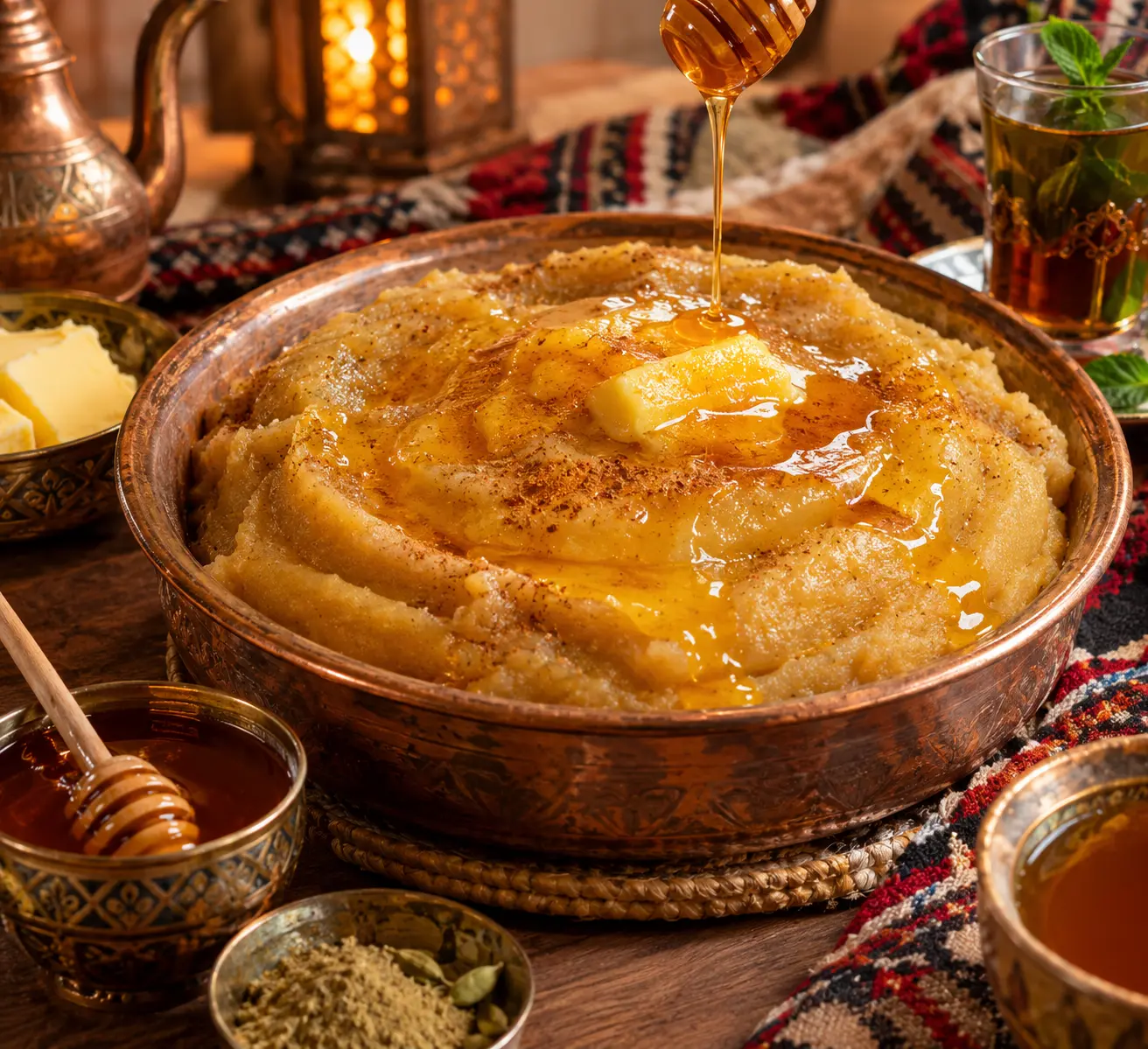
Libyan Asida with Honey and Butter: Authentic Traditional Recipe
Category
Plats traditionnels - Libyenne
Difficulty
Easy
Preparation
20 min
Cooking
15 min
Servings
6
Views
193
Reading
5 min
Rating
5/5
Description
Libyan asida is much more than a simple dessert: it is a warm embrace that envelops the soul, a return to one's roots where the simplicity of the ingredients becomes an unforgettable sensory experience. Imagine a golden dough, both dense and soft, that literally melts on the tongue, covered with fragrant melted butter and amber honey flowing in delicious ribbons. Each bite is a comforting caress, a sweetness that evokes childhood memories and family evenings around the wood stove.
This emblematic dish of Libyan cuisine has its roots in the millennia-old history of the Maghreb. Asida, whose name means "dough" in Arabic, is an ancestral food found in various forms across the Arab world, but it is in Libya that it takes on a particularly sacred dimension. Traditionally prepared on major occasions - births, religious festivals such as Mawlid, or simple family gatherings - asida symbolizes hospitality and sharing. Its preparation, passed down from generation to generation, is a ritual that brings together the women of the house around the large copper dish, each contributing her own touch to achieve the perfect texture.
At the heart of this recipe lies a marriage of flavors of disarming simplicity: wheat flour, toasted until it releases a hazelnut aroma, binds with boiling water to form an elastic, satiny dough. Clarified butter, called samneh, brings a milky richness and incomparable creaminess, while honey, often jujube or thyme, unfolds its floral and woody notes. A pinch of ground cardamom perfumes the whole with an exotic touch, like a breath of incense that instantly transports you to the souks of Tripoli. The texture, both firm and melting, lends itself to being eaten by hand, forming small balls that are dipped in the butter-honey mixture.
Libyan asida is traditionally enjoyed in winter, when the desert cold sets in and bodies crave nourishing food. It is often served at breakfast or as an afternoon snack, accompanied by a glass of piping hot mint tea. In some regions, it is also prepared to celebrate the end of the harvest or to welcome a distinguished guest. Tasting it is a moment of pure conviviality: everyone helps themselves from the shared dish, creating an invisible bond among the guests. It is a dish that is eaten not only with the mouth but with the heart.
Preparing this traditional Libyan recipe at home means inviting a little of the magic of the Maghreb into your kitchen. The simplicity of the ingredients should not mislead you: the secret lies in the gesture, in the patience of mixing, and in the love put into preparing it. So let yourself be tempted by this culinary journey and discover why asida is much more than a dessert: it is a heritage, an emotion, a celebration of life.
Ingredients
- 500 g wheat flour
- 250 ml water
- 100 g clarified butter (samneh) or unsalted butter
- 150 g quality honey (jujube, thyme or all-flower)
- 1/2 teaspoon ground cardamom
- 1 pinch salt
- Optional: 1 tablespoon orange blossom water
Preparation steps
-
1
In a large heavy-bottomed saucepan, bring the water and salt to a boil. Meanwhile, sift the flour into a large bowl.
-
2
Pour the boiling water over the flour in one go, then mix vigorously with a wooden spoon until a homogeneous dough forms. Let cool slightly.
-
3
Knead the dough by hand for about 10 minutes, until it becomes smooth and elastic. If it is too sticky, add a little flour; if too dry, add a little warm water.
-
4
Shape the dough into a ball and return it to the saucepan. Cover and let rest for 15 minutes at room temperature.
-
5
In a small saucepan, melt the clarified butter over low heat. Add the ground cardamom and orange blossom water if using. Mix well and remove from heat.
-
6
Pour half of the perfumed butter over the dough and mix by hand or with a wooden spoon until completely absorbed. The dough should become supple and shiny.
-
7
Shape the asida into a neat dome in a deep serving dish. Make a well in the center with the back of a spoon.
-
8
Pour the honey into the well and drizzle the top with the remaining melted butter. Serve immediately, very hot, dipping pieces of dough into the honey-butter mixture.
Nutrition
| Fat | 14 g |
|---|---|
| Calories | 420 kcal |
| Carbohydrates | 68 g |
| Protein | 6 g |
Rate this recipe
Comments 0
No comments yet. Be the first to comment!