
Maghrebi Kaddid: The Ancestral Art of Dried Meat Preserved in Oil
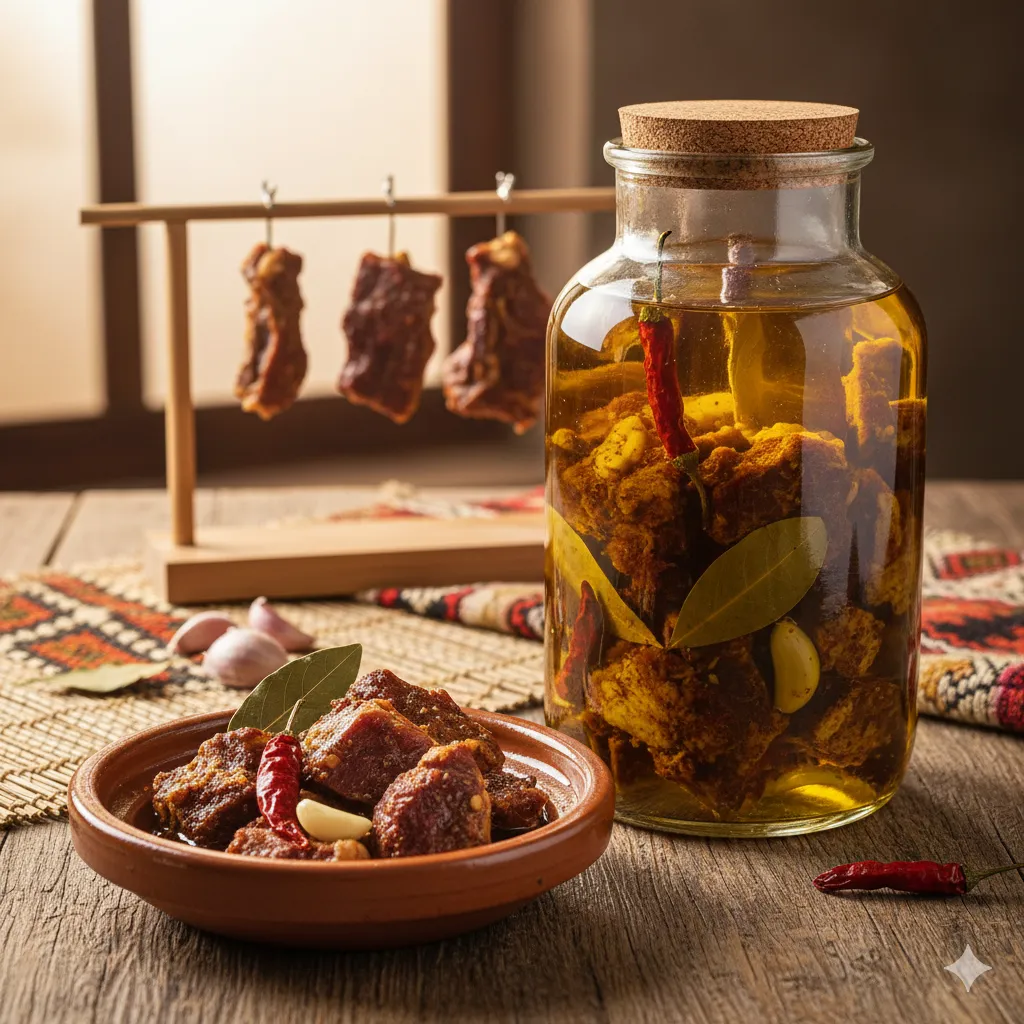
Maghrebi Kaddid: The Ancestral Art of Dried Meat Preserved in Oil
Category
Conservation / Tradition
Difficulty
Medium
Preparation
30 min
Cooking
60 min
Servings
3
Views
1,387
Reading
4 min
Rating
5/5
Description
Dive into the heart of Maghreb culinary traditions with Kaddid, a meat preservation method that is far more than a simple technique. It is a true journey through time, a flavourful heritage that allowed families to preserve the goodness of festive meats all year round. Imagine strips of lamb, long seasoned with a warm blend of spices, then sun-dried until they achieve a unique texture that is both firm and melting.
This dried meat, then confited in extra virgin olive oil, becomes a reserve of intense flavours. It is like a symphony of salty, spicy and umami notes, ready to enhance a multitude of dishes. Kaddid is the soul of traditional cooking, a treasure of patience and know-how that transforms a simple ingredient into an explosion of taste. On the palate, it is a unique experience: a slightly resistant bite that releases an incredible concentration of aromas, evoking sun-drenched kitchens and gestures passed down from generation to generation.
Preparing your own Kaddid at home means reconnecting with this ancestral tradition. It is an almost meditative process that requires time and attention, but rewards you a hundredfold. The result? A characterful condiment, a magical touch to add to couscous, tagines, soups or even omelettes. Each bite tells a story of sun, wind and preservation. Discover how to capture the essence of this dried meat preserved in oil and keep a little of this culinary magic in your pantry.
Ingredients
- 1 kg lamb shoulder or leg (lean and without sinew)
- 50 g coarse sea salt (non-iodized)
- 2 tablespoons sweet paprika
- 1 tablespoon ground cumin
- 1 teaspoon ground ginger
- 1 teaspoon ground coriander
- 1 teaspoon mild chilli pepper (Aleppo type) - optional
- 1/2 teaspoon freshly ground black pepper
- 3 garlic cloves, finely pressed
- Extra virgin olive oil, as needed to cover
Preparation steps
-
1
Preparing the meat: Cut the lamb into thin strips about 1.5 cm thick, 3 cm wide and 10-15 cm long, following the direction of the muscle fibres. Carefully remove all visible fat and sinew.
-
2
Seasoning: In a large bowl, thoroughly combine the coarse salt, paprika, cumin, ginger, coriander, mild chilli pepper and black pepper. Add the pressed garlic and mix to obtain a spiced paste.
-
3
Massaging and salting: Add the meat strips to the spice mixture, massaging them well so that each piece is evenly coated. Cover the bowl with cling film and let marinate in the refrigerator for 24 to 48 hours.
-
4
Drying: After marinating, lightly wipe off the excess marinade without removing the spices. Arrange the meat strips on clean racks, making sure they do not touch. Cover them with muslin or a thin cloth to protect them from insects.
-
5
Sun-drying: Place the racks in full sun, in a dry, well-ventilated spot, for 3 to 5 days. Bring them inside at night to avoid humidity. The meat is ready when it is firm, dry on the surface and dark red in colour, but still slightly supple inside.
-
6
Optional oven pre-drying: If conditions are humid, you can help the drying by placing the meat on a rack in the oven at 50°C (thermostat 1/2), with the door ajar, for 4 to 6 hours.
-
7
Sterilising the jars: Meanwhile, sterilise one or more large glass jars with rubber seals (such as Le Parfait) and their lids by scalding them for 10 minutes. Let them air-dry completely on a clean tea towel.
-
8
Filling: Gently pack the strips of dried meat (kaddid) into the sterile jar, leaving about 2 cm of headspace below the rim.
-
9
Preserving in oil: Pour the extra virgin olive oil into the jar, making sure it completely and entirely covers all the meat, without any air bubbles. The oil should rise at least 1 cm above the surface of the meat.
-
10
Sealing and storage: Seal the jar tightly. Store it in a cool, dark, dry place (cellar or larder) for at least 2 weeks before the first tasting, allowing the flavours to meld perfectly. Once opened, keep refrigerated and always ensure the meat remains submerged in the oil.
Rate this recipe
Comments 0
No comments yet. Be the first to comment!