
Algerian Couscous with Vegetables - Traditional Vegetarian Dish
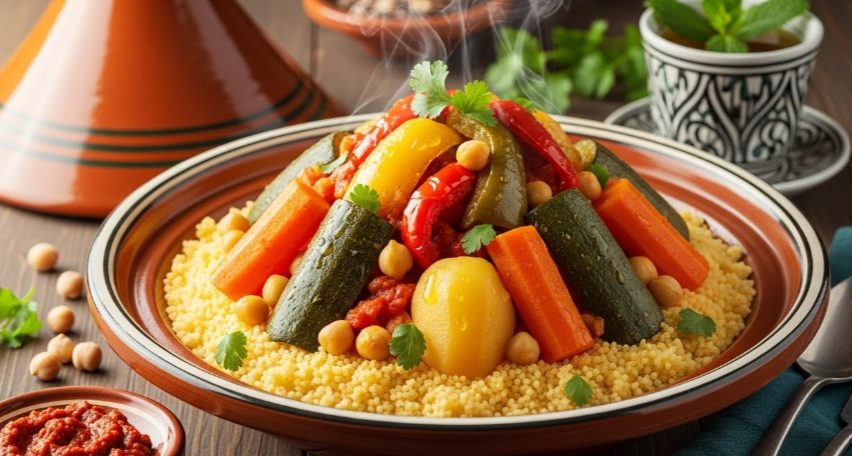
Algerian Couscous with Vegetables - Traditional Vegetarian Dish
Category
Plats traditionnels - Algérien
Difficulty
Medium
Preparation
25 min
Cooking
45 - 60 min
Servings
3
Views
1,194
Reading
6 min
Rating
5/5
Description
Discover the authenticity of Algerian cuisine with this traditional recipe for Algerian Couscous with Vegetables, an iconic dish that awakens the senses like a symphony of flavors in Maghrebi homes. This Algerian specialty is a true treasure of traditional gastronomy, combining the lightness of wheat semolina with the freshness of seasonal vegetables and the richness of Algerian spices.
Like a Mediterranean garden revealing its treasures with each season, Algerian Couscous with Vegetables transforms simple ingredients into an unforgettable culinary work. The semolina, steamed in a couscoussier, becomes light and airy like a desert breeze, while the colorful vegetables simmer gently in a broth scented with traditional spices, creating a perfect harmony of textures and flavors. This couscous recipe transports you directly to the traditional kitchens of Algiers, Oran or Constantine, where each bite tells a story of tradition and family togetherness.
Algerian Couscous with Vegetables is much more than a simple dish: it is an invitation to discover the soul of Algerian cuisine, where every ingredient plays its part in this age-old culinary symphony. The varied vegetables (carrots, zucchini, turnips, chickpeas) bring freshness, color and balance, while the fragrant broth with spices delicately envelops each grain of semolina. Served hot with a generous, fragrant sauce, this vegetarian dish is perfect for family meals and special occasions, bringing comfort and warmth to every tasting.
Ingredients
- 250 g medium wheat semolina
- 2 medium carrots
- 2 zucchini
- 1 turnip
- 1 green bell pepper
- 100 g dried chickpeas (soaked 12 hours in advance) or 1/2 can of ready-to-use chickpeas (125g)
- 1 medium onion
- 2 garlic cloves
- 1 tablespoon tomato paste
- 1 teaspoon ras el hanout
- 1/2 teaspoon turmeric
- 1/2 teaspoon ground cumin
- 1/2 teaspoon ground coriander
- 1/2 teaspoon sweet paprika
- 1 tablespoon extra virgin olive oil
- 20 g butter
- Salt and freshly ground black pepper
- A few sprigs of chopped fresh cilantro
Preparation steps
-
1
Prepare the chickpeas: If using dried chickpeas, soak them in cold water for at least 12 hours (or overnight). The next day, drain and rinse them. If using canned chickpeas, simply drain and rinse them.
-
2
Prepare the vegetables: Peel the carrots and cut them into 3-4 cm pieces. Wash the zucchini and cut them into slices about 1 cm thick. Peel the turnip and cut it into quarters. Wash the bell pepper, remove the seeds and white membranes, then cut it into strips. Peel the onion and slice it thinly. Peel and chop the garlic. Wash and chop the fresh cilantro.
-
3
Heat the olive oil: In a large pot or couscoussier, heat the olive oil over medium heat. The oil should be hot but not smoking.
-
4
Sauté the onion and garlic: Add the sliced onion to the hot oil and cook for 3-4 minutes until translucent and lightly golden. Then add the chopped garlic and cook for 30 more seconds, stirring constantly to prevent it from burning.
-
5
Add the spices and tomato paste: Stir in the tomato paste, ras el hanout, turmeric, cumin, ground coriander, paprika, salt and pepper. Mix well to create a fragrant base. Cook for 1-2 minutes so the spices release their aromas.
-
6
Add the vegetables and water: Add the carrots, turnip and chickpeas. Cover with water to just cover (about 750 ml). Bring to a boil, then reduce the heat and simmer covered for 20 minutes, until the carrots begin to soften.
-
7
Add the delicate vegetables: After 20 minutes, add the zucchini and bell pepper. Cook for another 15-20 minutes, until all the vegetables are tender but still slightly crisp. The sauce should have thickened and be well seasoned. Taste and adjust the seasoning if necessary.
-
8
Prepare the semolina: While the vegetables simmer, prepare the semolina. Place the semolina in a large dish or bowl. Add a tablespoon of olive oil and mix well with your fingers to coat each grain. Add a little warm salted water (about 80 ml) and mix again. Let rest for 15-20 minutes so the semolina absorbs the moisture.
-
9
Steam the semolina: If you have a couscoussier, place the semolina in the steamer basket and steam for 20-25 minutes over the simmering broth. If you do not have a couscoussier, you can use a steamer basket or a sieve placed over a pot of boiling water. The semolina should be light and airy.
-
10
Fluff and butter the semolina: Pour the steamed semolina into a large dish. Add the butter and fluff it with a fork or your fingers to separate the grains and achieve a light and airy texture. The semolina should be well separated and not sticky.
-
11
Serve and enjoy: Arrange the semolina in a large deep serving dish. Arrange the vegetables around the semolina and generously ladle over the fragrant broth. Sprinkle with chopped fresh cilantro. Serve very hot. Each guest can serve themselves and mix the semolina with the broth according to their preferences. Serve with a little harissa for those who like spicier flavors.
-
12
Chef's tip: For an even more authentic version, you can add potatoes or fresh tomatoes to the preparation. Couscous keeps very well in the refrigerator for 2-3 days and reheats perfectly by steaming or in the microwave. For a lighter version, you can reduce the amount of butter in the semolina or omit it completely.
Nutrition
| Fiber | 8 g |
|---|---|
| Fat | 8 g |
| Calories | 285 kcal |
| Carbohydrates | 48 g |
| Protein | 10 g |
Rate this recipe
Comments 0
No comments yet. Be the first to comment!