Algerian Dolmas with Swiss Chard Leaves: Wild Rice, Lamb and Pine Nut Filling
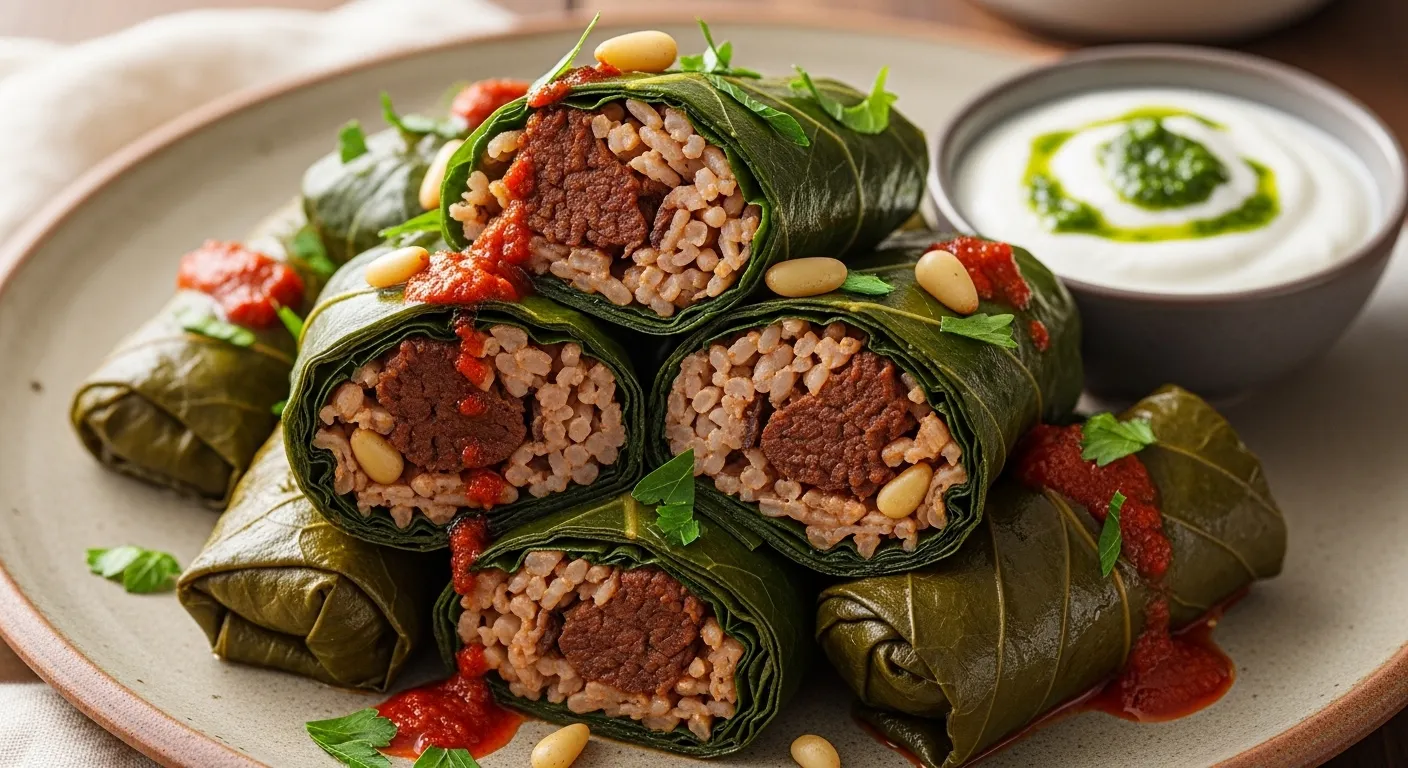
Algerian Dolmas with Swiss Chard Leaves: Wild Rice, Lamb and Pine Nut Filling
Category
Plats traditionnels - Algérien
Difficulty
Medium
Preparation
45 min
Cooking
50 min
Servings
4
Views
653
Reading
6 min
Rating
5/5
Description
Imagine a wrapped culinary treasure, a secret to be savored leaf after leaf. Algerian dolmas, in this refined Algiers version, are far more than a simple stuffed vegetable dish; they are a promise of sharing and a symphony of textures where the tenderness of the Swiss chard leaf meets the richness of a generous filling. Each bite is an invitation to a sensory journey, an ancient story told through the perfect balance between the melt-in-the-mouth lamb, the crunch of pine nuts, and the tangy note of a lemon broth. It is the iconic festive dish, transformed here into a delicate and memorable gastronomic experience.
The history of dolmas in Algeria is a fascinating page in the great book of Mediterranean cuisine. Introduced during the long Ottoman period, the art of stuffing vegetables and vine leaves became deeply rooted in the local terroir, happily adopting Maghreb produce. While the most widespread Algerian version often uses courgettes, aubergines or peppers, the use of large Swiss chard leaves (or blette) testifies to the adaptability and creativity of cooks. This dish, once reserved for great occasions and honored tables, has become democratized to become a pillar of family meals, especially during the holy month of Ramadan, where it embodies generosity and conviviality.
The magic of this recipe lies in the complex harmony of its flavors and textures. The Swiss chard leaf, previously blanched, brings a slightly herbaceous delicacy and perfect hold. Inside, the filling composes a rich picture: wild rice brings an interesting chew and a nutty note, contrasting with the savory tenderness of the minced lamb. Pine nuts, lightly toasted, release a woody richness, while currants, like little nuggets, offer bursts of sweet sweetness that cut through the richness of the meat. The whole is lifted by fresh flat-leaf parsley, golden onion and a subtle blend of spices. The slow simmering in a broth enhanced with preserved lemon or fresh lemon juice binds all these flavors and diffuses an enchanting aroma throughout the house.
This dish is the archetype of a sharing meal, perfect for large family tables, celebrations or to beautifully conclude a day of fasting during Ramadan. Served warm or at room temperature, these dolmas are often enjoyed as a generous starter or main course, simply accompanied by the fragrant cooking broth or a slice of bread for mopping up. Their preparation, although requiring a little patience for the rolling, often becomes a convivial moment, where people sit down to prepare these little parcels of flavor together. On a table, they symbolize hospitality and the care taken to nourish loved ones, perpetuating a culinary tradition several centuries old.
Preparing these Algerian dolmas with Swiss chard leaves is much more than following a recipe; it is giving yourself a journey to the heart of Algiers cuisine, refined and generous. It is accepting to take the time to create something unique, where each step, from blanching the leaves to the slow simmering, contributes to building unforgettable flavors. We invite you to plunge your hands into this fragrant filling, roll these leaves carefully and discover the pride of serving a dish that tells a story. Let the aromas of lamb, spices and lemon transport you, and savor the fruit of this culinary adventure, authentic and deeply comforting.
Ingredients
- 12 large Swiss chard (bette/blette) leaves, green and firm
- 300 g minced lamb shoulder
- 100 g wild rice, precooked
- 1 large yellow onion, finely sliced
- 50 g pine nuts
- 30 g currants
- 1 large bunch of flat-leaf parsley, chopped
- 1 teaspoon ground cinnamon
- 1/2 teaspoon ground ginger
- Salt and freshly ground black pepper
- 3 tablespoons olive oil
- 750 ml chicken stock (or water)
- Juice of 1 lemon
- 1 slice preserved lemon (optional, for the broth)
Preparation steps
-
1
Prepare the Swiss chard leaves: Wash them carefully. Bring a large pot of salted water to a boil. Blanch the leaves for 2 to 3 minutes until they become pliable and bright green. Plunge them immediately into a large bowl of ice water to set the color. Drain them and pat them gently with a clean kitchen towel. If necessary, cut away the toughest part of the central rib to make folding easier.
-
2
Prepare the filling: In a skillet, heat one tablespoon of olive oil. Toast the pine nuts over medium heat until lightly golden. Set aside. In the same skillet, cook the sliced onion until translucent. In a large mixing bowl, combine the minced lamb, precooked and drained wild rice, golden onions, pine nuts, currants and chopped parsley. Add the cinnamon, ginger, salt and pepper. Mix vigorously with your hands until the filling is homogeneous.
-
3
Assemble the dolmas: Lay a Swiss chard leaf flat on your work surface, shiny side down. Place 1 to 2 tablespoons of filling (depending on the size of the leaf) in the center of the base of the leaf. Fold the base over the filling, then fold the left and right sides inward. Roll firmly but not too tightly to the end of the leaf to form a compact little parcel. Repeat with all the leaves and all the filling.
-
4
Cook the dolmas: In a large heavy-bottomed Dutch oven, pour in the remaining olive oil. Arrange the dolmas snugly against each other, seam side down, in a single layer. Pour in the chicken stock until it barely covers the dolmas. Add the lemon juice and the preserved lemon slice if using. Bring to a gentle simmer. Cover and leave to cook over very low heat for 45 to 50 minutes. The dolmas are cooked when the leaves are very tender and the rice in the filling is perfectly cooked.
-
5
Serve: Carefully remove the dolmas from the Dutch oven using a slotted spoon and arrange them on a serving platter. You can reduce the cooking broth slightly over high heat to thicken it and spoon it over the dolmas, or serve it separately in a bowl. Serve warm or at room temperature, as a starter or main course.
Rate this recipe
Comments 0
No comments yet. Be the first to comment!