Marqa Batata: Tunisian Potato and Meat Stew
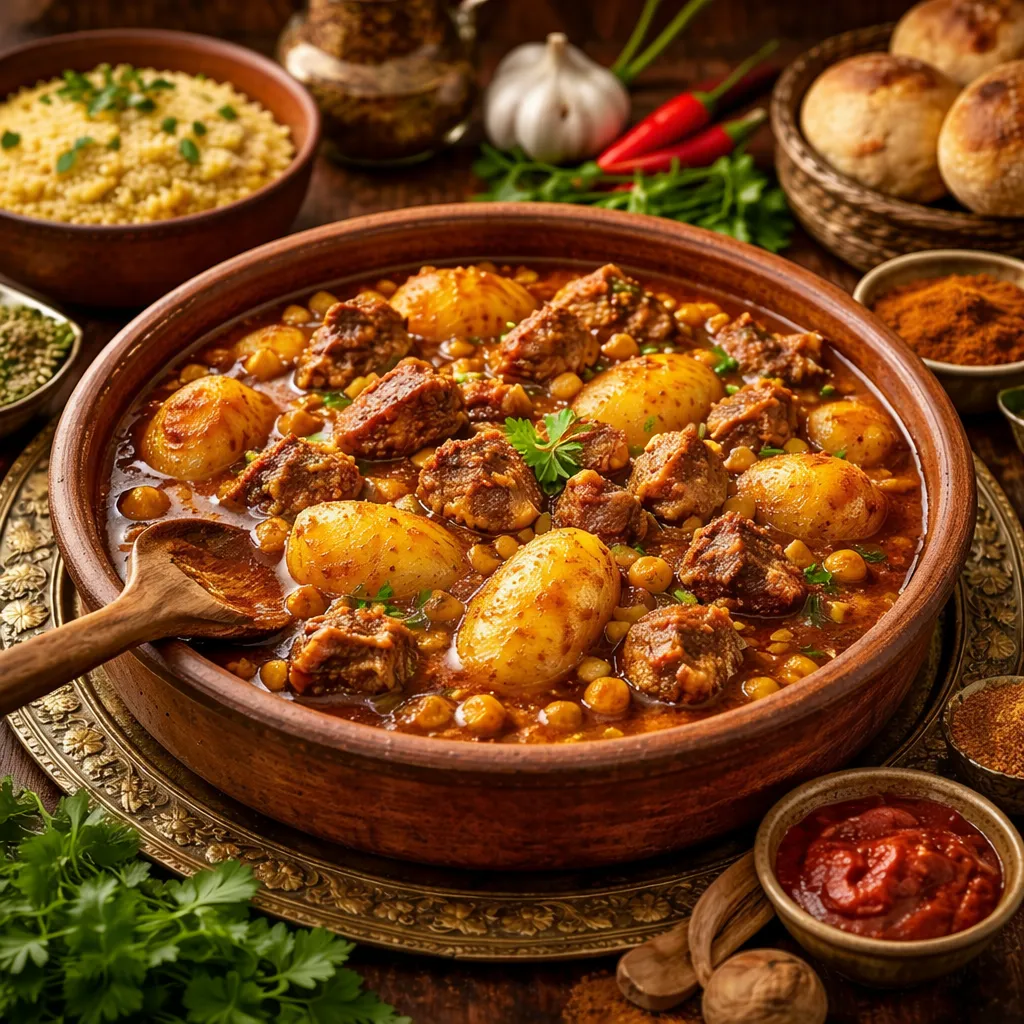
Marqa Batata: Tunisian Potato and Meat Stew
Category
Plats traditionnels - Tunisien
Difficulty
Easy
Preparation
20 min
Cooking
65 min
Servings
4
Views
410
Reading
6 min
Rating
5/5
Description
Imagine a dish that is the culinary equivalent of a warm, comforting hug, a perfect harmony between the earthy sweetness of potatoes and the deep richness of slow-cooked meat. That dish is Marqa Batata, an iconic stew of Tunisian cuisine that transforms simple ingredients into a feast for the senses. It is the quintessence of comfort, a symphony of flavors in which every ingredient, humble by nature, is elevated in a generous, fragrant broth to create an experience that nourishes both body and soul. Much more than a simple recipe, it is a journey into the heart of Tunisian homes, a culinary heritage passed down from generation to generation.
The roots of Marqa Batata run deep into the land and culinary history of the Maghreb. Born of necessity and ingenuity, this stew bears witness to a family cuisine that makes the most of every ingredient. The potato, introduced later, was enthusiastically adopted and skillfully integrated into the repertoire of traditional Tunisian dishes. The term “marqa” refers precisely to this type of sauce-based preparation, often tomato-based, in which vegetables and meat cook slowly until perfectly fused. It is an everyday dish, an economical recipe and robust, embodying the art of eating well without breaking the bank, a philosophy dear to Mediterranean cuisine where generosity of flavor takes precedence over elaborate presentation.
At the first spoonful, it is a true explosion of flavors that awakens the taste buds. The potatoes, melting inside and slightly absorbent, have soaked up the rich, spiced broth, becoming little treasures of taste. The meat is incomparably tender, falling apart at the slightest touch and releasing all its sweetness. The sauce, heart and soul of the dish, is an enchanting blend where the gentle acidity of tomato marries the warm notes of cumin and coriander, all lifted by the subtle heat of harissa or pepper. The garlic and onion, melted, provide a deep aromatic base, while a drizzle of olive oil at the finish ties everything together with a fruity, velvety touch. It is a perfect balance between strength and sweetness, between rusticity and complexity.
Marqa Batata is the ideal companion for family and convivial meals. It often sits in the center of the table, in its traditional dish, simply accompanied by fresh bread, ideally a country loaf or kesra, to mop up every last drop of sauce with delight. It is the dish of choice for Sunday lunches, winter evenings, or whenever you want to offer a nourishing and comforting meal without spending hours in the kitchen. Its very simplicity makes it a safe bet, a timeless classic that appeals to all ages. Served in a large dish so everyone can help themselves generously, it symbolizes sharing and togetherness, fundamental values of Tunisian and Maghrebi culture.
Preparing an authentic Marqa Batata at home is much more than following a list of ingredients; it is giving yourself a moment of connection with a rich and generous culinary tradition. It is an opportunity to make the spices dance in your kitchen, to let the aromas of cumin and coriander fill your home, and to treat yourself to a dish that has stood the test of time without losing its charm. Whether you are a lover of Tunisian cuisine or simply looking for a comforting and tasty dish, this stew will win you over. Follow this recipe step by step, let the aromas guide you, and get ready to receive compliments for this potato and meat stew that, once tasted, quickly becomes a must-have in your cooking repertoire. So, grab your pots and enjoy the culinary journey!
Ingredients
- 600 g firm-fleshed potatoes (Charlotte type)
- 300 g lamb or beef cut into small cubes
- 1 large onion, finely chopped
- 3 garlic cloves, pressed
- 400 g tomato pulp (or canned crushed tomatoes)
- 2 tablespoons tomato paste
- 1 teaspoon harissa (or more to taste)
- 1 teaspoon ground cumin
- 1 teaspoon ground coriander
- 1/2 teaspoon turmeric
- 1 liter hot water
- 3 tablespoons olive oil
- 1 bunch flat-leaf parsley, chopped
- Salt and freshly ground black pepper
Preparation steps
-
1
Prepare the vegetables: Peel the potatoes and cut them into large, even cubes (about 3–4 cm). Finely chop the onion and press the garlic cloves. Chop the parsley.
-
2
Brown the meat and aromatics: In a large Dutch oven or pot, heat the olive oil over medium-high heat. Add the meat cubes and brown them on all sides for 5–6 minutes. Add the chopped onion and cook until translucent. Stir in the pressed garlic and cook for one minute to release its fragrance.
-
3
Add the spices and tomato: Add the tomato paste, harissa, cumin, coriander, and turmeric to the pot. Stir well to coat the meat and onions, and cook for 2 minutes to bloom the spices and develop their aromas.
-
4
Start the cooking: Pour in the tomato pulp and hot water. Season generously with salt and pepper. Bring to a boil, then reduce the heat to low, cover, and simmer for 30 minutes. This allows the meat to begin tenderizing and the flavors to infuse.
-
5
Add the potatoes: After 30 minutes of simmering, add the potato cubes to the pot. They should be barely covered with liquid; add a little hot water if necessary. Stir gently.
-
6
Finish the cooking: Cover and simmer again over low heat for 25 to 30 minutes, or until the potatoes are perfectly tender (a knife tip should slide in easily) but not falling apart. Check the seasoning as it cooks.
-
7
Serve: When the sauce has slightly thickened and everything is cooked just right, remove from the heat. Sprinkle generously with chopped parsley. Serve the Marqa Batata very hot, directly in the pot or in a deep serving dish, accompanied by fresh bread for soaking up the sauce.
Rate this recipe
Comments 0
No comments yet. Be the first to comment!