
Mloukheya with Semolina Dumplings and Snails: Forgotten Tunisian Recipe
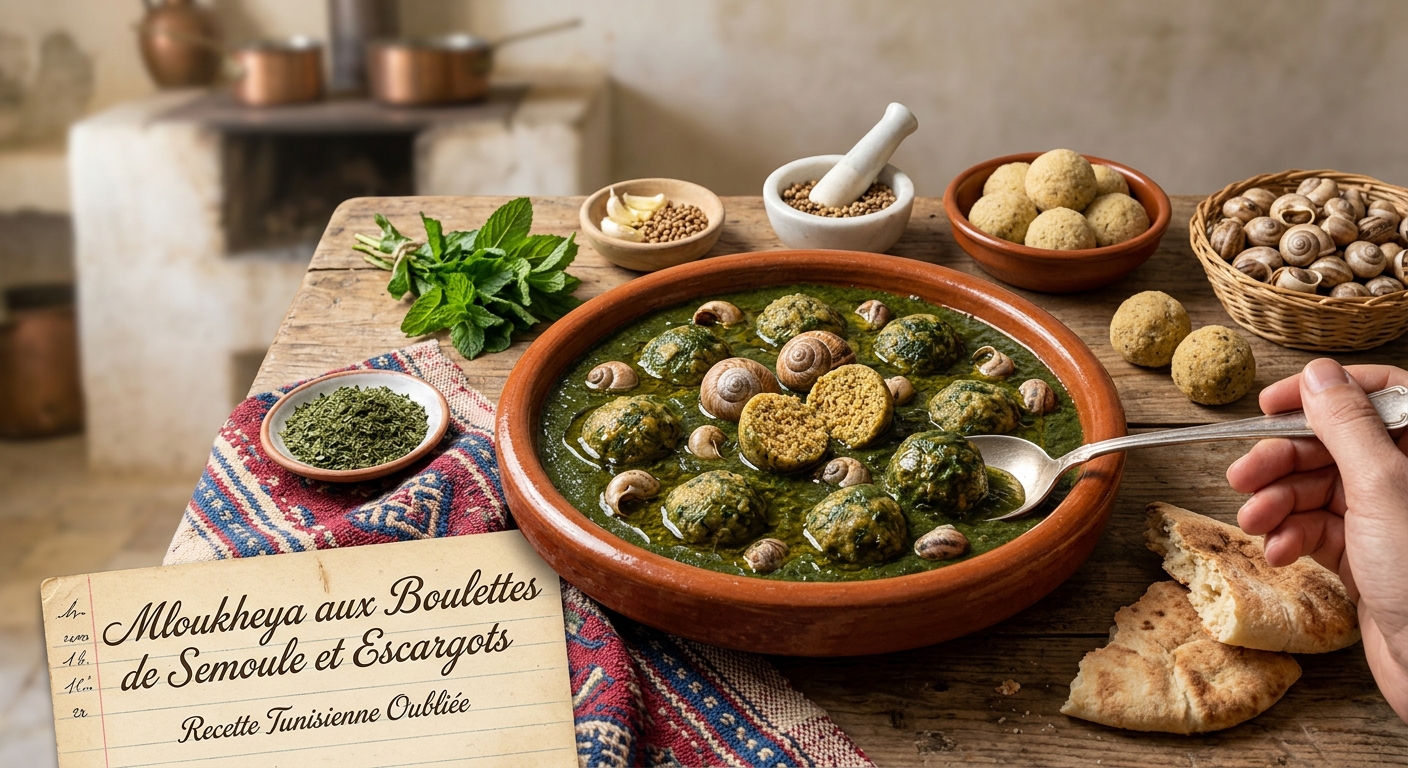
Mloukheya with Semolina Dumplings and Snails: Forgotten Tunisian Recipe
Category
Plats traditionnels - Tunisien
Difficulty
Medium
Preparation
45 min
Cooking
90 min
Servings
4
Views
164
Reading
6 min
Rating
5/5
Description
In the heart of the Tunisian winter, when the cold sets in and the days grow shorter, there is a dish that warms hearts and bodies like a warm embrace: mloukheya with semolina dumplings and snails. This almost forgotten recipe is a treasure of rustic Tunisian cuisine, a heritage passed down from generation to generation in the countryside. Imagine a deep green, almost black sauce with a velvety texture and an enchanting aroma, where small golden semolina dumplings and tender snails swim, all enhanced by a blend of spices that awakens the taste buds. It is a symphony of earthy and comforting flavors, a dish that tells a story of terroir and traditions.
Mloukheya, or jute mallow, is a plant with green leaves that, once dried and ground into powder, gives this characteristic color and slightly bitter, herbaceous taste. In Tunisia, it is traditionally cooked with lamb or beef, but in rural areas, snails were sometimes added, abundant after the autumn rains. The semolina dumplings, called mhamsa or berkoukes depending on the region, are made from durum wheat semolina rolled by hand into small pearls. They provide a soft texture and wonderfully absorb the sauce. This dish is a perfect example of Maghreb peasant cuisine, where nothing is wasted and every ingredient is used with respect.
The first bite is a revelation: the creamy sauce coats the palate, releasing aromas of jute mallow, garlic, and coriander, with a hint of acidity from the lemon. The semolina dumplings, slightly firm, burst under the tooth, while the snails, slowly cooked, offer a tender texture and a subtle forest floor taste. The spices, such as caraway and sweet paprika, add a gentle warmth that gradually spreads. It is a dish to be savored slowly, enjoying each spoonful, like listening to an old song that brings back childhood memories.
This dish is traditionally served on major family occasions, especially during the winter months, for gatherings around a wood fire. It is often accompanied by homemade bread, used to generously mop up the sauce. In some regions, it is prepared to celebrate the end of the harvest or to welcome distinguished guests. Its preparation, although lengthy, is an act of love and sharing. Today, this recipe has become rare, but it deserves to be rediscovered and preserved as a living culinary heritage.
Preparing this mloukheya with semolina dumplings and snails is to embark on a sensory journey into the heart of deep Tunisia. It is to reconnect with ancestral gestures, inhale forgotten aromas, and taste authenticity. So, let yourself be tempted by this culinary adventure, and offer your table a dish that will surprise and delight your guests. A unique recipe that transforms simple ingredients into a memorable feast.
Ingredients
- 200 g mloukheya powder (dried and ground jute mallow)
- 500 g country snails (previously cleaned and purged)
- 300 g medium durum wheat semolina (for the dumplings)
- 1 medium onion, finely chopped
- 4 garlic cloves, crushed
- 3 tablespoons olive oil
- 1 tablespoon tomato paste
- 1 teaspoon ground caraway
- 1 teaspoon ground coriander
- 1/2 teaspoon sweet paprika
- 1 bay leaf
- 1 litre hot water (about)
- Juice of half a lemon
- Salt and black pepper to taste
- Water for cooking the snails and dumplings
Preparation steps
-
1
Preparing the snails: If the snails are fresh, make sure they have been purged and well cleaned. Boil them in a large pot of salted water for 10 minutes. Drain them and set aside. This step helps tenderize them and remove impurities.
-
2
Preparing the semolina dumplings: In a large bowl, pour the semolina. Gradually add warm salted water (about 100 ml) while rubbing the semolina between your hands to form small dumplings the size of a couscous grain. Let rest for 15 minutes, then steam the dumplings in a couscous steamer for 20 minutes. Set aside.
-
3
Preparing the sauce base: In a large pot, heat the olive oil over medium heat. Add the chopped onion and sauté until translucent. Add the crushed garlic and sauté for 1 more minute, stirring.
-
4
Adding the spices and tomato: Stir in the tomato paste, caraway, ground coriander, sweet paprika, and bay leaf. Mix well and cook for 2 minutes to release the aromas.
-
5
Incorporating the mloukheya: Pour the mloukheya powder into the pot while stirring vigorously to avoid lumps. Gradually add the hot water (about 1 litre) while continuing to stir until you obtain a smooth and homogeneous sauce. Bring to a boil.
-
6
Cooking the snails in the sauce: Add the pre-cooked snails to the sauce. Reduce the heat to low, cover, and let simmer for 1 hour, stirring occasionally. The sauce should thicken and the snails become tender. If the sauce becomes too thick, add a little water.
-
7
Adding the semolina dumplings: Stir the steamed semolina dumplings into the pot. Mix gently to coat them well with sauce. Let simmer for another 15 minutes over low heat so they absorb the flavors.
-
8
Final seasoning: Add the lemon juice, salt, and pepper to taste. Remove the bay leaf. Let rest for 5 minutes off the heat before serving.
-
9
Serving: Serve the mloukheya very hot in bowls, accompanied by traditional Tunisian bread. You can garnish with a drizzle of olive oil and a few fresh coriander leaves.
Nutrition
| Fat | 15 g |
|---|---|
| Calories | 420 kcal |
| Carbohydrates | 55 g |
| Protein | 18 g |
Rate this recipe
Comments 0
No comments yet. Be the first to comment!