
Sorghum Droô: Authentic and Nutritious Recipe from Rural Tunisia
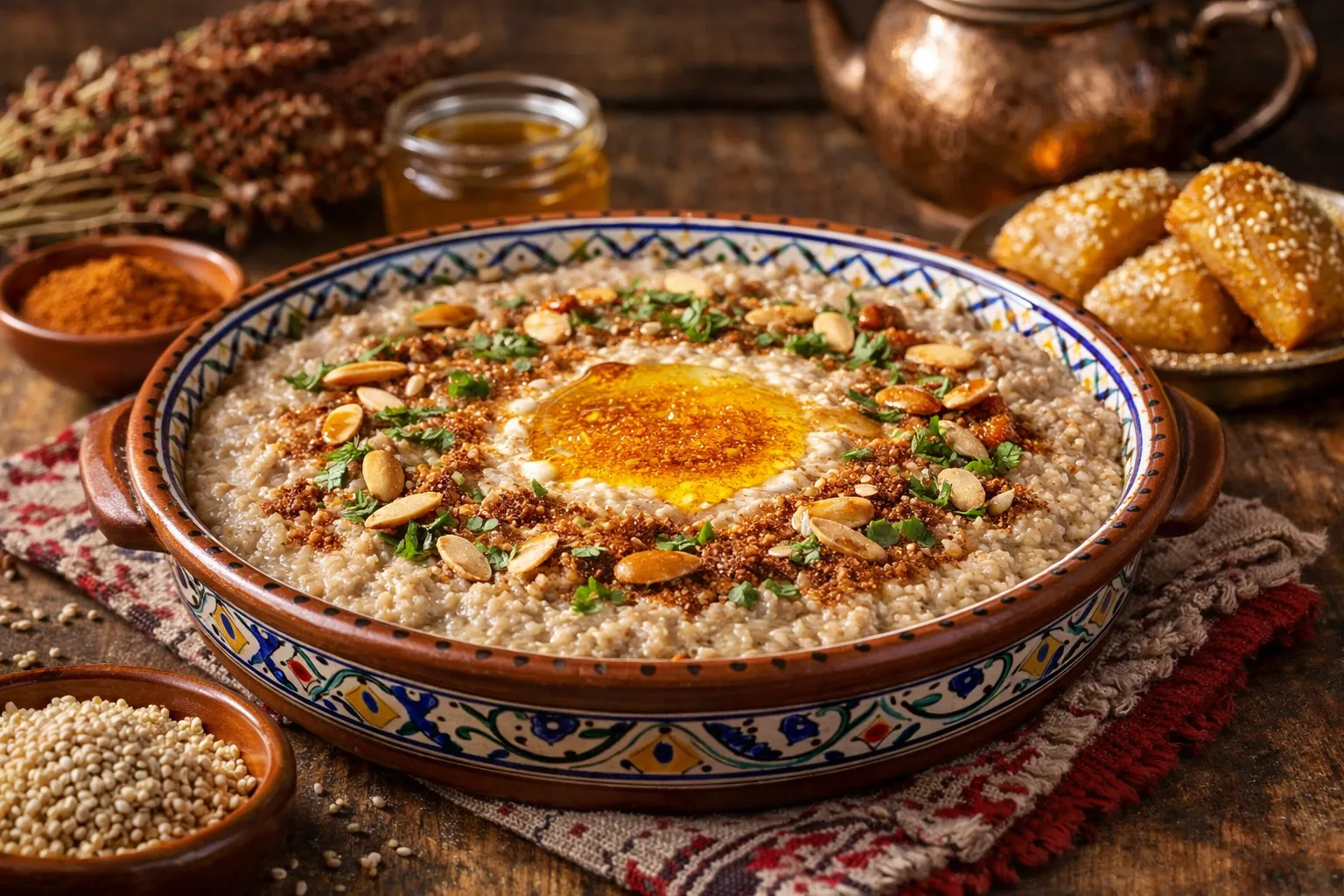
Sorghum Droô: Authentic and Nutritious Recipe from Rural Tunisia
Category
Plats traditionnels - Tunisien
Difficulty
Easy
Preparation
10 min
Cooking
30 min
Servings
3
Views
741
Reading
7 min
Rating
5/5
Description
Droô with sorghum is far more than a simple dish; it is a journey back in time, a return to the roots of the Tunisian land. Imagine a thick, creamy porridge, the color of terracotta at sunset, giving off a warm, rustic aroma. It promises a meal that nourishes not only the body but also the soul, rooted in the wisdom of the elders and the generosity of the harvests. This dish, often forgotten by fine dining, is a culinary treasure that tells the story of an intimate and respectful relationship with grains. Preparing it is to honor a centuries-old tradition where every gesture has meaning, where the simplicity of the ingredients turns into a symphony of deep, comforting flavors.
Sorghum, or “droô” as it is affectionately called in Tunisia, is the cornerstone of this ancestral recipe. Cultivated for millennia in the semi-arid regions of the Maghreb, this hardy cereal was the dietary pillar of rural communities, able to withstand drought where wheat weakened. The dish that bears its name was born of necessity and the ingenuity of country women, who transformed this humble grain into a complete, energy-rich, and satisfying meal for farming families and field workers. More than a recipe, it is a heritage, a culinary testimony to a time when self-sufficiency and respect for local produce dictated the menu. It evokes whitewashed kitchens, the sound of the hand mill grinding the grains, and the inimitable aroma escaping from large earthenware pots set over a wood fire.
On a sensory level, Droô is a true tactile and taste experience. Its texture is a perfect balance between the creamy density of polenta and a slightly grainy bite that recalls the very nature of the cereal. In the mouth, a neutral, earthy sweetness settles first, quickly enriched by the deep roundness of local olive oil, fruity and peppery. Garlic and cumin, discreetly infused, bring warm, slightly pungent notes that awaken the whole without overwhelming it. Each spoonful is a silky blend where the oil’s richness marries the texture of the sorghum, creating an immediate sense of comfort. It is a frank, unadorned flavor that speaks directly to the palate with the authenticity of raw, well-handled products. The aroma it gives off is that of warm bread and roasted spices, a scent of home and sharing.
Traditionally, Droô is enjoyed in a family and convivial setting, often as a simple but nourishing dinner after a long day of labor. It is typically served very hot, directly in the cooking dish or in individual deep plates, accompanied by wedges of fresh onion, crunchy radishes, or black olives to add a touch of freshness and contrast. In some families, homemade bread is dipped into it, making this dish a perfect base for “mopping up.” It is also a food of choice during the coldest months, providing warmth and lasting energy. Today, it is regaining pride of place on the tables of Tunisians seeking authenticity and healthy food, and it can be presented in a more refined way, drizzled with extra virgin olive oil and sprinkled with toasted sesame seeds, for a meal that celebrates its roots with elegance.
Embarking on the preparation of Droô means accepting a timeless pause, a moment of connection with the simple, effective gestures of traditional cooking. It is an accessible recipe but one that requires a little patience and attention, especially when mixing to achieve the perfect texture—neither too liquid nor too compact. The result, however, is worth the effort: a dish of exceptional nutritional richness, gluten-free, and a deeply comforting flavor that will leave no one indifferent. It will instantly transport you to the Tunisian countryside, at the heart of a thousand-year-old culinary tradition where every ingredient has a story to tell. Get ready to discover sorghum at its noblest and to experience a unique gustatory adventure, full of meaning and benefits.
Ingredients
- 200 g fine sorghum semolina (or finely ground sorghum grains)
- 1 litre water
- 1 heaped teaspoon salt
- 4 tablespoons extra virgin olive oil
- 3 garlic cloves, finely sliced
- 1 teaspoon ground cumin
- 1 pinch black pepper
- To serve: sliced red onion, radishes, black olives
Preparation steps
-
1
Prepare the aromatic base: in a medium heavy-bottomed pot (ideal for preventing scorching), pour in the olive oil and heat over low heat. Add the sliced garlic and sweat for 1 to 2 minutes until fragrant and lightly golden, without letting it brown, to avoid bitterness.
-
2
Incorporate the spices: sprinkle the cumin and black pepper over the garlic. Stir quickly for 30 seconds to lightly toast the spices and release all their aromas into the oil. This step is crucial for the depth of flavor of the dish.
-
3
Add the water and bring to a boil: pour the litre of water into the pot. Add the salt. Bring the mixture to a rolling boil over medium-high heat. The water should be very hot and aromatic before adding the sorghum.
-
4
Incorporate the sorghum in a thin stream: once the boil is reached, lower the heat to medium. Take the sorghum semolina in one hand and, with the other hand using a wooden spoon, begin stirring the water in a constant circular motion. Let the semolina fall in a very fine, steady stream while stirring continuously to prevent lumps from forming.
-
5
Let it thicken: once all the semolina has been incorporated, continue stirring vigorously for 2 to 3 minutes. The mixture will quickly begin to thicken. Reduce the heat to low.
-
6
Slow cooking and steaming: cover the pot and let cook over very low heat for 20 to 25 minutes. It is important to stir every 5 minutes with the wooden spoon, scraping the bottom of the pot well, so that the porridge cooks evenly and does not stick.
-
7
Check the texture: after this time, the porridge should have a thick, creamy consistency that pulls away slightly from the sides of the pot. If it seems too compact, you can add a little hot water and mix well. If it is too liquid, extend the cooking uncovered for a few minutes.
-
8
Final rest: once the ideal texture is achieved, remove the pot from the heat. Let the Droô rest, covered, for 5 minutes before serving. This rest allows the flavors to harmonize perfectly and the texture to stabilize.
-
9
Plating and serving: serve the Droô very hot in deep plates or bowls. Optionally drizzle with a little extra olive oil. Accompany with finely sliced red onions, sliced radishes, and black olives for a contrast of freshness and saltiness.
Rate this recipe
Comments 0
No comments yet. Be the first to comment!