
Semolina Cake with Caramelized Figs and Jujube Honey - Algerian Recipe
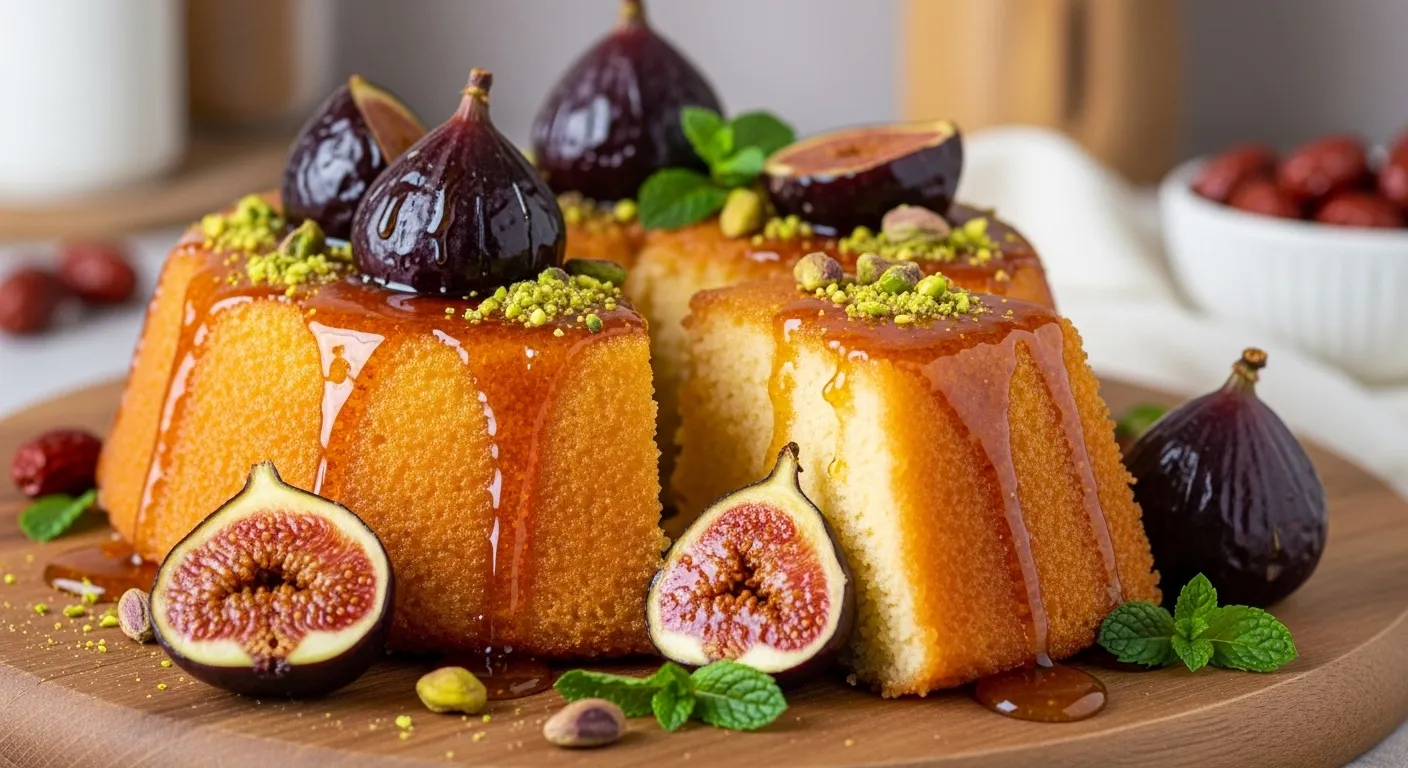
Semolina Cake with Caramelized Figs and Jujube Honey - Algerian Recipe
Category
Plats traditionnels - Algérien
Difficulty
Medium
Preparation
25 min
Cooking
30 min
Servings
6
Views
810
Reading
7 min
Rating
5/5
Description
Imagine a golden cloud, light and fluffy like a childhood memory, gently landing on your palate before giving way to the sweet, warm brightness of an emblematic late-summer fruit. The semolina cake with caramelized figs and jujube honey is much more than a simple dessert; it is a sensory experience that captures the very essence of Algerian sweets. This dish, both humble and sophisticated, is a symphony of textures where the softness of the semolina meets the crunch of sesame seeds and the juicy softness of the figs. Each bite is a journey through the sun-drenched landscapes of the Maghreb, a celebration of the produce generously offered by the Mediterranean sun.
This semolina cake, ancestor of North African pastries, has its roots in Berber culinary tradition, where durum wheat semolina was, and remains, the queen of cereals. There are many variations, from Mbesses oranais to Kabyle cake perfumed with orange blossom water, each telling the story of a region, of a family. The innovation here, the union with caramelized fresh figs, is a tribute to the spirit of sharing and adaptation that characterizes Algerian cuisine. It marries the tradition of semolina cake, often served for celebrations and courtesy visits, with the generosity of the Atlas orchards, where fig trees bend under their fruit at the end of summer. It is a seasonal dessert, ephemeral and precious, that honors the natural cycle of the harvest.
The magic happens in the contrast of flavors and sensations. The base, a semolina cake made with a blend of medium and fine semolina for a texture that is both grainy and melting, is infused with a subtle scent of vanilla and orange blossom water. This floral, sunny note paves the way for the star of the dessert: the fresh fig. Caramelized in brown butter, it develops deep, almost wine-like aromas and a texture that is tender inside and slightly crisp on the surface. The whole is crowned with a drizzle of jujube honey (sedra), a rare nectar with woody, slightly spicy and caramelized notes that binds all the elements together like a thread of liquid gold. The result is an explosion of flavors: the rounded sweetness of the semolina, the tartness and sweetness of the fig, the complexity of the honey and the final crunch of toasted sesame seeds.
This dessert is ideally enjoyed warm, straight from the oven, when its aromas are at their peak. It is the perfect centerpiece to end a festive meal, such as a ftour during Ramadan, or to accompany mint tea during a friendly visit. It embodies the art of Algerian hospitality, the djouza, that sweet offering that seals friendship and welcome. Served in generous portions, it invites conviviality and sharing. It is also a wonderful dessert for late summer and early autumn, when figs are fully ripe, creating a direct link between the table and local produce. A new presentation of a classic, it will delight lovers of palate delights in search of revisited authenticity.
Preparing this cake is to offer yourself a moment of culinary meditation. The rubbing of the semolina with butter, the scent that fills the kitchen as the figs caramelize, the final shine brought by the honey... each step is a simple and rewarding ritual. This recipe, detailed step by step, guides you to reproduce these authentic Algerian flavors at home. Whether you are familiar with makrouts with dried figs or a curious novice in Maghrebi pastry, this semolina cake with fresh figs is an invitation to travel and indulgence. Let yourself be tempted by this creation that combines tradition and modernity, and bring a little of the warmth and generosity of Algeria into your kitchen.
Ingredients
- 250 g medium durum wheat semolina
- 50 g fine semolina
- 150 g granulated sugar
- 1 sachet vanilla sugar
- 1 pinch of salt
- 1 pinch of baking soda
- 180 g unsalted butter
- 2 tablespoons orange blossom water
- 1 teaspoon liquid vanilla extract
- 8-10 ripe fresh figs
- 2 tablespoons jujube honey (sedra) or all-flower honey
- 1 tablespoon sesame seeds
- Oil for the pan
Preparation steps
-
1
Prepare the cake base: in a large mixing bowl, combine the two types of semolina (medium and fine), the granulated sugar, vanilla sugar, salt and the pinch of baking soda. Mix well dry to combine evenly.
-
2
Melt 150 g of butter in a small saucepan over low heat until it takes on a lovely hazelnut color and gives off a nutty aroma. Leave it to cool for a few minutes. Pour the melted and cooled brown butter over the semolina mixture. Using your fingertips, rub the semolina with the butter for 3-4 minutes to coat it thoroughly, without kneading, until you obtain a sandy, homogeneous texture.
-
3
Incorporate the orange blossom water and vanilla extract into the semolina mixture. Mix quickly to obtain a dough that clumps together slightly. Generously butter a 24 cm round cake pan. Pour in the semolina mixture and press it down firmly and evenly with the back of a spoon or the bottom of a glass. Set aside. Preheat your oven to 180°C (fan/convection).
-
4
Prepare the figs: wash and dry the figs. Cut them into quarters. In a pan, melt the remaining 30 g of butter. Add the fig quarters and cook them over medium-high heat for 4-5 minutes, turning them gently, until they are lightly caramelized and golden. Arrange the caramelized figs nicely on the surface of the semolina cake, pressing them in very lightly.
-
5
Bake the cake for 25 to 30 minutes, until the edges and surface are nicely golden. Meanwhile, dry-toast the sesame seeds in a small pan for 2 minutes, until they are golden and fragrant. Set aside.
-
6
When the cake comes out of the oven, leave it to cool for 10 minutes in its pan. Then, using a pastry brush, generously brush the still-warm surface with the jujube honey, concentrating on the figs. Immediately sprinkle with the toasted sesame seeds.
-
7
Leave the cake to cool completely before carefully unmolding. To serve, cut the cake into slices using a sharp knife. It is best enjoyed the same day, slightly warm or at room temperature.
Rate this recipe
Comments 0
No comments yet. Be the first to comment!