
Tunisian Bouza with Mastic and Dried Fruits: Authentic Ice Cream
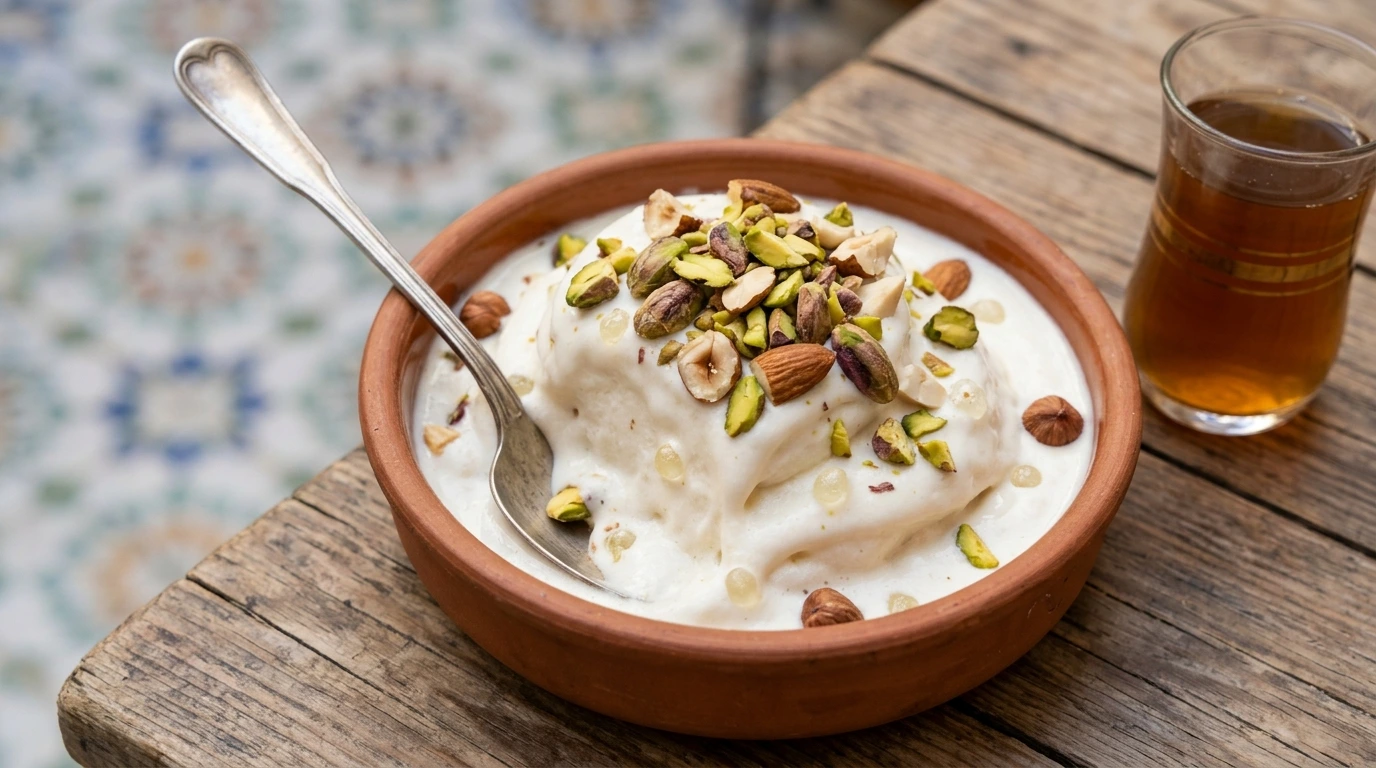
Tunisian Bouza with Mastic and Dried Fruits: Authentic Ice Cream
Category
Plats traditionnels - Tunisien
Difficulty
Medium
Preparation
30 min
Cooking
15 min
Servings
6
Views
183
Reading
7 min
Rating
5/5
Description
Tunisian bouza is much more than a simple ice cream: it is a frozen caress that melts on the tongue like a childhood memory, a sweet embrace that evokes the white lanes of Sidi Bou Saïd and the scorching afternoons of a Mediterranean summer. Imagine a texture that is both creamy and slightly elastic, stretching into silky threads when you dip in your spoon, and a delicate aroma of mastic and rose water that instantly transports you to a traditional Tunisian pastry shop. This ice cream is not a simple dessert; it is a sensory journey to the heart of the Maghreb, an invitation to slow down and savor every moment like a precious sip of freshness.
The history of bouza goes back several centuries, rooted in the culinary traditions of Tunisia and, more broadly, the Levant. Its name derives from the Turkish 'buz,' meaning ice, evidence of the Ottoman influences that shaped Maghreb gastronomy. Originally, it was prepared with snow or crushed ice mixed with fruit juices and natural thickeners such as wild orchid powder, called 'sahlab.' This powder, extracted from orchid tubers, gives bouza its unique texture—dense and stretchy, almost gelatinous—that distinguishes it from Western ice creams. Over time, the recipe was enriched with precious aromatics such as mastic, an aromatic resin harvested on the Greek island of Chios, and rose water, distilled from Damask rose petals. These noble ingredients, once reserved for royal tables, became the emblems of this popular delicacy, sold in the souks by street vendors who kept it in metal pails surrounded by ice and salt.
When you taste this bouza, your palate is first surprised by an intense, almost mineral freshness, which quickly gives way to a floral, resinous sweetness. The mastic, with its notes of pine and cedar, adds a woody depth that marries beautifully with the delicacy of rose water, creating an aromatic symphony that is both subtle and bewitching. The texture, meanwhile, is a true play of contrasts: it seems firm at first, then yields under the tongue to transform into a melting cream, slightly elastic, that coats the palate like a veil of satin. The crushed dried fruits—almonds, pistachios, hazelnuts—add a crunchy, toasted touch, a perfect counterpart to the milky sweetness of the ice cream. Each bite is an explosion of flavors that awakens the taste buds and evokes the Thousand and One Nights, a perfect balance between sweet, floral, and woody.
This traditional ice cream is much more than a simple dessert: it is a social ritual, a moment of sharing and togetherness. In Tunisia, it is often enjoyed at the end of a meal, on major occasions such as weddings, religious holidays, or family gatherings. It is served in small glass cups, generously sprinkled with dried fruits and sometimes drizzled with a little rose syrup. In the popular cafés of Tunis, it is savored slowly, while chatting in the shade of whitewashed walls, as children crowd around the vendor to get an extra portion. Making this bouza at home means perpetuating an ancestral tradition, inviting the soul of Tunisia into your kitchen and offering your loved ones a moment of pure happiness, an enchanted pause that evokes the fragrant gardens and starry evenings of the Maghreb.
So let yourself be tempted by this authentic and easy-to-make recipe. With a little patience and quality ingredients, you can recreate at home this frozen wonder that has endured through the centuries. Whether to impress your guests at a summer dinner or simply to treat yourself to a comforting sweetness, Tunisian bouza with mastic and dried fruits is an unforgettable culinary experience. Follow our detailed steps, and soon the intoxicating aroma of mastic and rose will fill your kitchen, transporting you, one spoonful at a time, to the sunny lanes of the Tunis medina.
Ingredients
- 500 ml whole milk
- 200 ml heavy cream (30% fat)
- 100 g granulated sugar
- 2 tablespoons sahlab powder (or cornstarch as a substitute)
- 1 teaspoon ground mastic (or 3-4 small mastic tears crushed with 1 teaspoon sugar)
- 2 tablespoons rose water
- 1 tablespoon orange blossom water (optional)
- 50 g slivered almonds, toasted and crushed
- 50 g unsalted pistachios, toasted and crushed
- 50 g hazelnuts, toasted and crushed
- 1 tablespoon liquid honey (for serving, optional)
Preparation steps
-
1
In a heavy-bottomed saucepan, pour in the milk and cream. Add the sugar and sahlab powder (or cornstarch). Whisk well to completely dissolve the powder and prevent lumps.
-
2
Place the saucepan over medium heat and bring the mixture to a gentle boil, stirring constantly with a wooden spoon or whisk. The mixture will gradually thicken and take on the consistency of a light custard. This takes about 10 to 15 minutes.
-
3
Once the mixture has thickened, remove the saucepan from the heat. Stir in the ground mastic (or the mastic tears crushed with the sugar) and mix vigorously until completely melted and well distributed. The mastic will add a subtle resinous note.
-
4
Add the rose water and orange blossom water (if using). Mix well. Let the mixture cool to room temperature, then cover the saucepan with plastic wrap pressed directly onto the surface (to prevent a skin from forming) and refrigerate for at least 4 hours, ideally overnight, so the flavors develop and the texture firms up.
-
5
After the resting time, pour the mixture into an ice cream maker and churn according to the manufacturer's instructions, usually for 20 to 30 minutes, until it reaches a soft, creamy ice cream consistency. If you do not have an ice cream maker, pour the mixture into a shallow container, place it in the freezer, and whisk vigorously every 30 minutes for 3 to 4 hours to break up ice crystals and achieve a smooth texture.
-
6
While the ice cream churns, prepare the dried fruits: lightly toast the slivered almonds, pistachios, and hazelnuts in a dry skillet over medium heat for 2-3 minutes, stirring, until fragrant. Let them cool, then coarsely crush them using a knife or a mortar.
-
7
When the ice cream is ready, gently fold in half of the crushed dried fruits with a spatula, distributing them evenly. Transfer the bouza to an airtight container and place it in the freezer for at least 2 hours to firm up slightly before serving.
-
8
To serve, remove the bouza from the freezer 5 to 10 minutes before eating, so it softens slightly. Scoop balls using an ice cream scoop dipped in hot water and place them in bowls. Sprinkle generously with the remaining crushed dried fruits and optionally drizzle with a little liquid honey. Serve immediately and enjoy this Tunisian delight.
Nutrition
| Fat | 20 g |
|---|---|
| Calories | 320 kcal |
| Carbohydrates | 28 g |
| Protein | 7 g |
Rate this recipe
Comments 0
No comments yet. Be the first to comment!