
Tunisian Olive Oil Ciabatta: Authentic Revisited Italian Bread Recipe
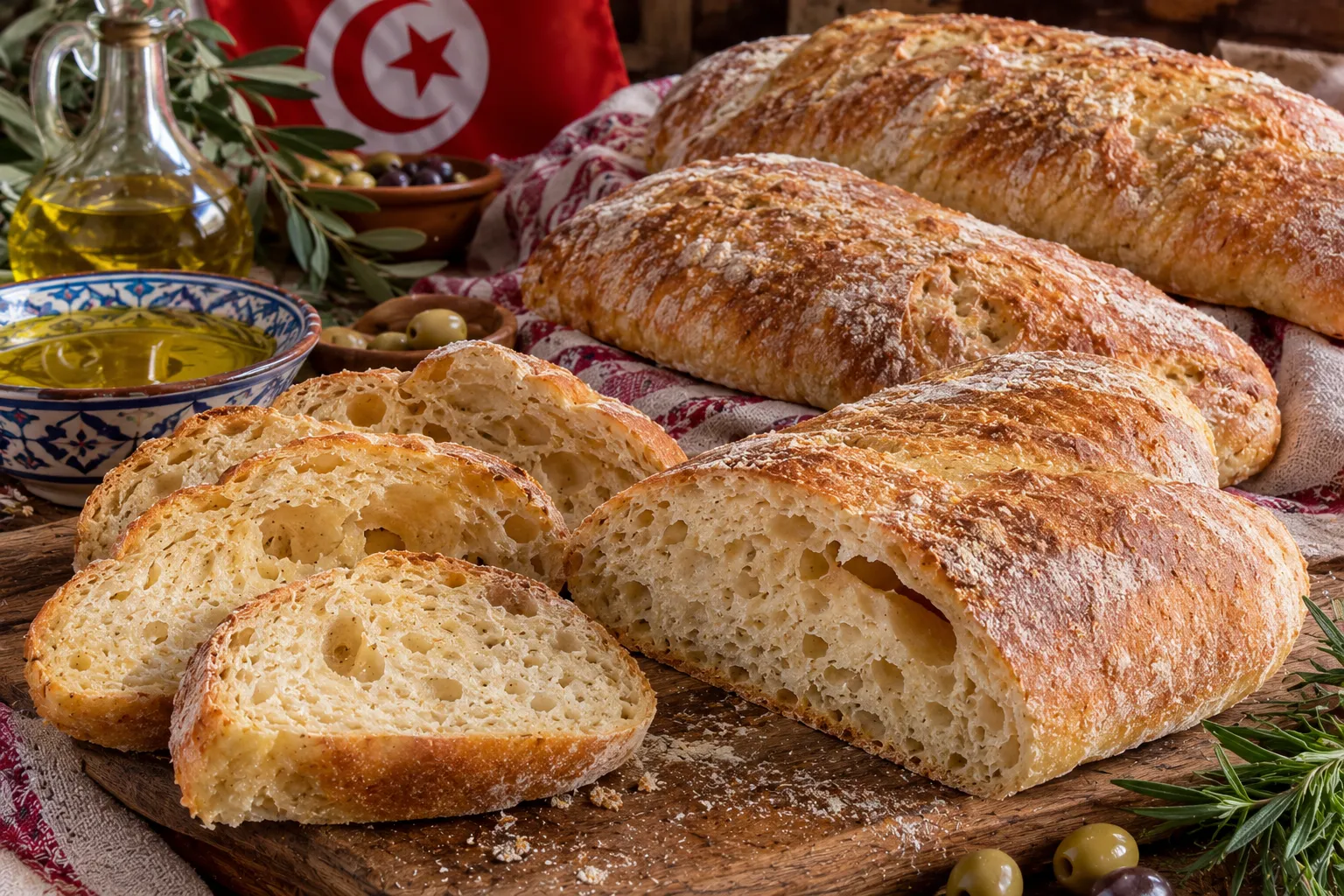
Tunisian Olive Oil Ciabatta: Authentic Revisited Italian Bread Recipe
Category
Plats à base de pâtes & galettes - Tunisien
Difficulty
Medium
Preparation
30 min
Cooking
25 min
Servings
2
Views
287
Reading
6 min
Rating
5/5
Description
Imagine a golden loaf of bread, with a crispy crust that sings under the blade of a knife, and an airy crumb, soft as a cloud. Ciabatta, that iconic Italian bread, reinvents itself here with a Tunisian touch, like a symphony of Mediterranean flavors that awakens the taste buds. This recipe is a sensory journey to the heart of the Maghreb, where fragrant olive oil and fine semolina combine to create a unique bread, both rustic and refined.
Ciabatta, born in Italy in the 1980s, conquered the world with its incomparable texture. But did you know that Tunisia, with its rich baking tradition, adopted and adapted this bread to make it a beloved specialty? In the bakeries of Tunis or Sfax, Tunisian ciabatta stands out for its use of local olive oil, often from the olive groves of Sidi Bouzid or Kairouan, and is sometimes enriched with a touch of durum wheat semolina, a legacy of traditional breads such as tabouna or kesra. It is this fusion that gives this bread a Maghrebi identity while preserving its Italian soul.
From the first bite, you will be won over by the contrast between the thin, crackly crust, golden like a sunset over the Mediterranean, and the tender crumb, dotted with irregular air pockets that hold the olive oil like little pools of flavor. The aroma is captivating: slightly tangy sourdough notes, a fruity olive oil fragrance, and a touch of sea salt that enhances it all. This Tunisian ciabatta is an explosion of simple yet deep flavors, a tribute to artisanal bread that nourishes body and soul.
This bread is perfect for all occasions: serve it alongside a steaming chorba during Ramadan, or use it to make sandwiches filled with tuna, olives, and harissa, just the way they are loved on the streets of Tunis. It is also delicious dipped in a mixture of olive oil and zaatar, or simply grilled with a drizzle of olive oil and a pinch of fleur de sel. At family gatherings or beach picnics, Tunisian ciabatta brings a touch of authenticity and warmth, recalling the traditions of sharing bread in Maghrebi culture.
Preparing this Tunisian ciabatta is a rewarding experience, accessible even to amateur bakers. The dough, supple and slightly sticky, is worked gently to preserve the air bubbles that will produce an airy crumb. The secret lies in a long, slow fermentation, which develops aromas and improves digestibility. So put on your apron, take out your best olive oil, and let this authentic recipe guide you. You will obtain a bread worthy of the finest Tunisian tables, filling your kitchen with wonderful aromas and making your table proud.
Ingredients
- 500 g T65 wheat flour (or a mixture of 400 g T65 flour and 100 g fine durum wheat semolina)
- 350 ml lukewarm water (about 30°C)
- 10 g fine salt
- 7 g dry baker's yeast (or 20 g fresh yeast)
- 3 tablespoons Tunisian extra virgin olive oil
- 1 teaspoon sugar (to activate the yeast)
- Fine semolina or flour for the work surface
Preparation steps
-
1
In a small bowl, dissolve the dry yeast and sugar in 100 ml lukewarm water. Let rest for 10 minutes until the mixture foams slightly, indicating the yeast is active.
-
2
In a large mixing bowl, combine the flour (and semolina if using) with the salt. Make a well in the center, pour in the yeast mixture, olive oil, and remaining lukewarm water (250 ml).
-
3
Mix by hand or with a wooden spoon until you obtain a homogeneous, very sticky dough. Ciabatta dough should be more hydrated than classic bread dough, which is what will create an airy crumb.
-
4
Cover the bowl with a damp cloth and let the dough rest at room temperature for 30 minutes. Then perform the first fold: with a wet hand, lift one edge of the dough and fold it toward the center. Turn the bowl a quarter turn and repeat 3 times. Cover and let rest for another 30 minutes.
-
5
Repeat the folding operation two more times, at 30-minute intervals. In total, the dough will have fermented for about 2 hours and doubled in volume. It will be supple, elastic, and full of bubbles.
-
6
Generously flour the work surface with fine semolina or flour. Carefully turn the dough out onto the floured work surface without degassing it. Sprinkle the top with flour and gently stretch it into a rectangle about 2 cm thick.
-
7
Using a dough scraper or well-floured knife, cut the dough into 2 or 3 equal-sized rectangles. Gently transfer them to a baking sheet lined with parchment paper, spacing them apart. Cover with a cloth and let rise for another 30 to 45 minutes, until well puffed.
-
8
Meanwhile, preheat the oven to 240°C (gas mark 8) with a container of water placed in the bottom of the oven to create steam. Steam is essential for achieving a crispy crust.
-
9
Just before baking, lightly mist the tops of the loaves with water using a spray bottle or brush them with a little water. Place the baking sheet in the middle of the oven and bake for 20 to 25 minutes, until the ciabattas are golden brown and sound hollow when tapped on the bottom.
-
10
Remove the loaves from the oven and let cool on a wire rack for at least 30 minutes before slicing. This allows the crumb to set and remain soft.
Nutrition
| Fat | 15 g |
|---|---|
| Calories | 1250 kcal |
| Carbohydrates | 240 g |
| Protein | 35 g |
Rate this recipe
Comments 0
No comments yet. Be the first to comment!