
Couscous El Hamoum with Seafood and Cuttlefish Ink - Authentic Algerian Recipe
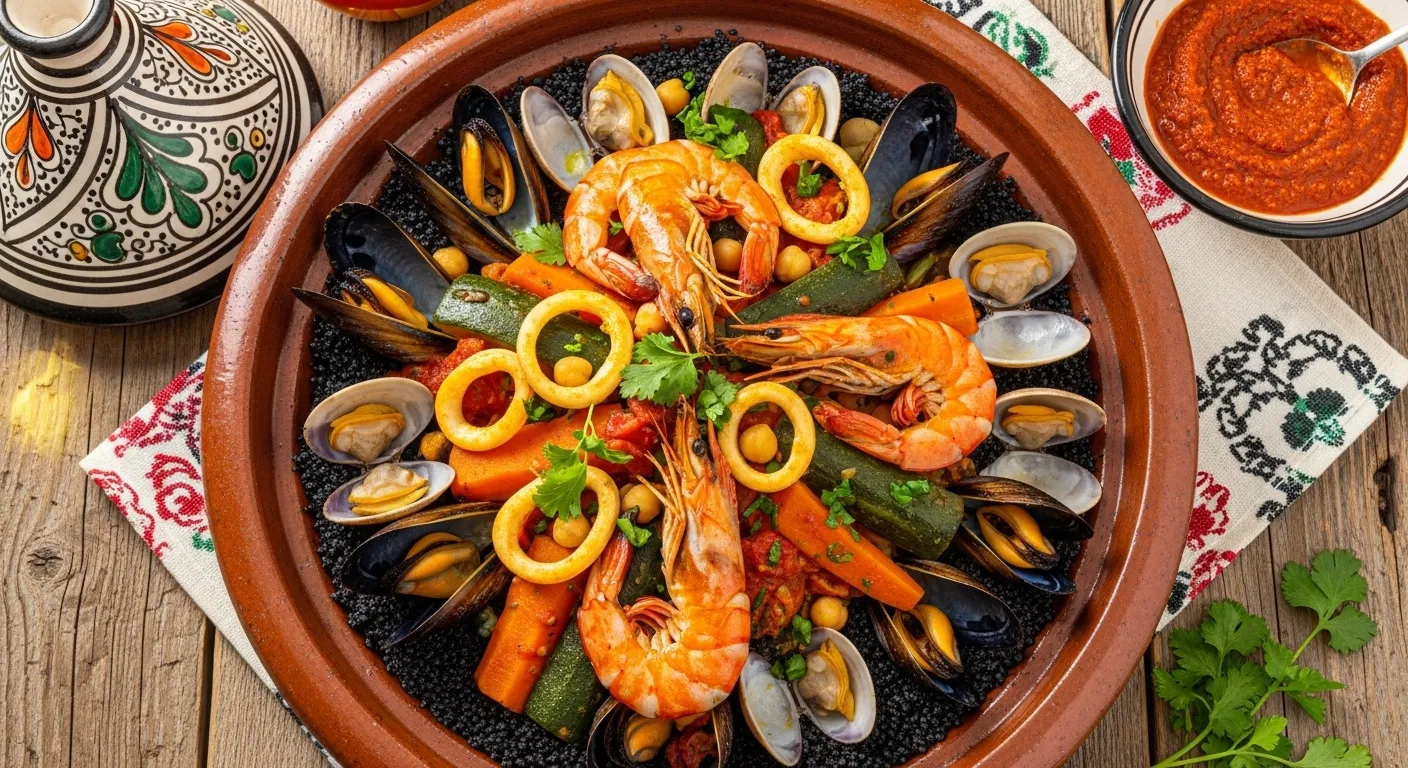
Couscous El Hamoum with Seafood and Cuttlefish Ink - Authentic Algerian Recipe
Category
Plats traditionnels - Algérien
Difficulty
Medium
Preparation
40 min
Cooking
50 min
Servings
4
Views
366
Reading
7 min
Rating
5/5
Description
Imagine a couscous that is not a simple grain of light, but a dark and deep constellation, a velvet of black semolina whispering the secrets of the earth and the sea. Couscous El Hamoum, this Algerian dish made with fermented wheat, is here adorned with its finest marine finery for a symphony where the umami taste of ink dances with the sweet delicacy of seafood. It is a culinary adventure rooted in Berber traditions, where the black grain, symbol of fertility and connection to the land, meets the generous abundance of the Mediterranean.
Black couscous, or el hamoum, is not a simple chromatic fancy. Its deep color and slightly tangy, earthy taste are the fruit of ancestral know-how, that of wheat fermentation, a technique reminiscent of the ancient preparations of Maghreb communities. This dish, often reserved for festive occasions or celebratory meals, embodies the richness of Algerian cuisine, capable of marrying mountain and coastal products with infinite grace. By pairing it with a seafood ragout, this duality is celebrated, creating a culinary bridge between the Algerian interior and coastline, between pastoral tradition and maritime culture.
On the tongue, a true explosion of flavors unfolds. The rye semolina, with its firm and slightly crunchy grain, offers a rustic and reassuring base. It captures with incredible generosity the rich broth, a marine elixir where the powerful savor of cuttlefish mingles with the delicacy of shrimp and the briny taste of mussels. The sauce, bound by the black magic of cuttlefish ink, brings incomparable umami depth, a saline and complex roundness that envelops every bite. A pinch of saffron, the red gold of spices, illuminates the whole with its warm, slightly metallic notes, creating a sublime contrast with the dark color of the dish. Each component keeps its identity while participating in a perfect harmony, like the instruments of an orchestra.
This Couscous El Hamoum with Seafood is much more than a meal; it is a celebration. It is the centerpiece of large family tables, the dish proudly served to honor a distinguished guest or mark a happy event. Its preparation, although requiring a little time, is a joyful ritual, a moment of sharing in the kitchen. Served piping hot in a large traditional dish, it invites conviviality, generous servings, and dipping bread into the broth of concentrated flavors. It is a complete sensory experience, where the eye is seized by the dramatic contrast between the black semolina and the vivid colors of the seafood, where the nose is intoxicated by marine and spicy aromas.
Preparing this Algerian couscous at home means treating yourself to a sensory journey into the heart of the Maghreb without leaving your kitchen. It means taking the time, respecting the steps – moistening the semolina, steaming in the couscoussier, slowly building the broth – to be rewarded with a dish of rare richness and authenticity. Whether you are a lover of Algerian cuisine or a curious cook in search of new flavors, this recipe promises a memorable discovery. It will teach you to tame fermented wheat and cuttlefish ink, and reveal why couscous el hamoum is a specialty as precious as it is delicious. So go ahead, and let the aromas of the sea and the earth fill your home for an unforgettable feast.
Ingredients
- 400 g black couscous (fermented rye semolina, el hamoum type)
- 500 g fresh cuttlefish, cleaned and cut into rings
- 2 sachets cuttlefish ink (about 10g)
- 200 g raw peeled grey shrimp
- 300 g bouchot mussels, cleaned
- 2 medium onions, finely sliced
- 3 garlic cloves, pressed
- 1 can crushed tomatoes (400g)
- 1 teaspoon tomato paste
- 1 generous pinch of saffron threads
- 1 teaspoon sweet paprika
- 1 teaspoon ground cumin
- 1 bunch fresh coriander, chopped
- 5 tablespoons olive oil
- Salt and freshly ground black pepper
- 1.5 liters hot water
Preparation steps
-
1
Prepare the semolina: In a large mixing bowl, pour in the black couscous. Moisten it with 2 glasses of cold water, working it with your fingertips to separate the grains and avoid lumps. Let it rest for 10 minutes so it absorbs the water.
-
2
First steaming: Break up the semolina again by hand. Place it in the top basket of the couscoussier without packing it down. Fill the bottom of the couscoussier with water and bring to a boil. Once the steam is well established, place the basket containing the couscous on top and cover. Steam for 15 to 20 minutes.
-
3
Prepare the ragout: Meanwhile, in a large Dutch oven or heavy-bottomed pot, heat 3 tablespoons olive oil. Sauté the sliced onions until translucent. Add the garlic, paprika, and cumin. Stir for one minute until the spices are fragrant.
-
4
Stir in the crushed tomatoes, tomato paste, and saffron. Season with salt and pepper. Let simmer over medium heat for 5 minutes. Pour in the hot water, bring to a boil, then lower the heat and let it simmer for 15 minutes so the flavors infuse.
-
5
Add the seafood: Add the cuttlefish rings to the pot and cook, covered, over low heat for 20 minutes, until tender. In a small bowl, dilute the cuttlefish ink sachets with 2 ladles of the cooking broth, then pour the mixture back into the pot and stir well.
-
6
Then add the mussels and shrimp. Cover and cook for an additional 5 to 7 minutes, until the mussels have opened and the shrimp are pink. Remove from the heat and stir in half of the chopped coriander. Taste and adjust the seasoning if necessary.
-
7
Second steaming of the couscous: Transfer the steamed couscous to the large mixing bowl. Separate the grains again with a fork or your fingers. Drizzle with the remaining 2 tablespoons olive oil and a little salt. Gently mix to coat every grain.
-
8
Place the couscous back in the couscoussier basket, above the ragout as it continues to simmer (or over a base of boiling water). Steam a second time for 10 to 15 minutes, until the grains are well swollen and tender.
-
9
To serve: To serve in the traditional way, arrange a mound of hot black couscous in the center of a large, deep serving dish. Make a well in the center and pour in the seafood ragout with its fragrant black broth. Sprinkle with the remaining fresh coriander.
-
10
Present the dish immediately, inviting everyone to serve themselves generously with semolina and seafood. This couscous should be eaten piping hot, allowing the semolina to continue absorbing the delicious marine juices.
Rate this recipe
Comments 0
No comments yet. Be the first to comment!